No, AI Didn't Take Down Outlook, the FAA, and the NSA
Five major outages in one week triggered AI-attack panic. The real causes are mundane — and far more dangerous.
ComputeLeap Team
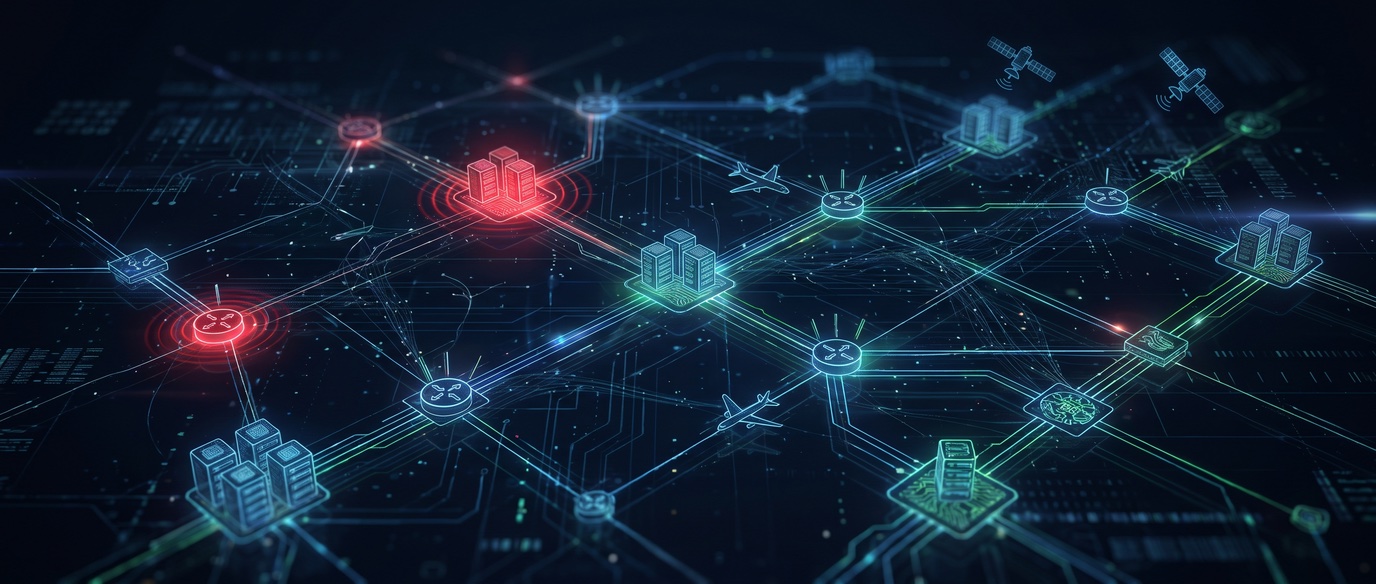
No, AI Didn't Take Down Outlook, the FAA, and the NSA
Five days. Five headline-grabbing infrastructure failures. And an irresistible narrative: AI did it.
Between November 12 and 17, 2026, Microsoft Outlook went dark for an estimated $7 billion in lost productivity. The FAA issued only the third nationwide ground stop in history, stranding tens of thousands of passengers. United Airlines' departure systems collapsed. A supply-chain attack through Optimizely infected 178 major websites including CNN, BBC, Salesforce, and Zoom. The NSA's classified internal network went offline. Apple's iCloud and App Store followed. And just for good measure, Google published its Q4 Threat Tracker documenting the first fully autonomous AI-driven cyberattacks observed in the wild.
The internet did what the internet does: it connected the dots into a conspiracy.
The reality is both more boring and more terrifying than "AI broke everything." Each outage has a proximate cause that traces back to the same unglamorous villain: technical debt. But the reason people reached for the AI explanation so quickly tells us something important about where we actually are in the security landscape — and why the real lesson of this week matters more than any conspiracy theory.
The Timeline: What Actually Broke
Here is what happened, in order, with the confirmed or strongly suspected cause for each event.
Microsoft Outlook / 365 (Nov 12-13)
The outage began at 4:20 PM UTC on November 12 and was not fully resolved until approximately 4:10 PM UTC on November 13 — roughly 24 hours of degraded or absent service for Exchange Online, Outlook, Teams, and other Microsoft 365 services. Downdetector logged over 130,000 incident reports.
Microsoft executive Charles Lamanna identified three factors: a latent software defect introduced in July 2026 that passed all testing, increased traffic load, and reduced server capacity. When the bug was triggered under these specific conditions, over 80% of servers became unresponsive, cascading the load onto the remaining infrastructure until the networking gateway that fronts Microsoft 365 collapsed entirely. Forbes reported Microsoft confirmed no indication of malicious activity.
This was not an attack. It was a four-month-old bug that slipped past load testing because the specific combination of conditions had never been tested together. Microsoft's final Post-Incident Report is due November 20.
FAA Nationwide Ground Stop (Nov 13)
The day after Outlook went down, the FAA issued a rare nationwide ground stop at approximately 3:55 PM ET on Friday, November 13. All U.S. departures were halted for over four hours — only the third time this has happened in FAA history.
The cause: during an ongoing project to upgrade the FAA's telecommunications backbone from copper wire to fiber optic, a Juniper router being installed at a remote site in El Dorado, Arkansas, began flooding the network with excessive data — reportedly 1,000 connection attempts every 4-5 seconds. The cascade overwhelmed the air traffic control communications system.
L3Harris, the contractor performing the upgrade, had been replacing 25-year-old Cisco routers. The FAA has since paused all 3,648 planned Juniper router installations while it investigates. Senate Democrats have questioned whether the equipment underwent adequate testing. Transportation Secretary Sean Duffy said a team of experts was on site at L3Harris's Florida lab.
The critical detail: the FAA's air traffic control backbone is running on 25-year-old Cisco routers. The upgrade that broke things was itself an attempt to pay down infrastructure debt. As The American Prospect reported, this is what chronic underinvestment looks like when it finally cracks.
United Airlines System Outage (Nov 16)
Three days after the FAA ground stop, United Airlines experienced a "widespread system outage" on Monday, November 16, that grounded departures and affected pilot-facing applications, crew communications, and the systems used to calculate final aircraft weights. FlightAware logged 418 delayed United flights.
United resolved the issue by Monday evening. The cause has not been publicly disclosed, but the outage affected United's internal systems — not the broader ATC infrastructure.
Optimizely Supply-Chain Attack (Nov 16)
This one actually was a cyberattack — just not an AI-driven one.
Researchers at Report URI, led by security researcher Scott Helme, discovered that attackers had exploited a vulnerability in Optimizely's Experimentation account signup flow to inject malicious JavaScript into customer projects. The infected code was served from Optimizely's trusted CDN, meaning it bypassed the Content Security Policies of 178 organizations.
The payload was multi-pronged: a crypto clipper that redirected cryptocurrency transactions, a card skimmer, cookie theft, and iOS exploit kit delivery. The attack ran for approximately 16-17 hours before Optimizely patched the flaw and purged the malicious code.

This is a textbook supply-chain attack. It exploited trust relationships, not AI capabilities. The same class of vulnerability that hit LiteLLM earlier this year — when you trust a third-party script, you trust their entire security posture.
NSA Internal Network / NSANet (Nov 17)
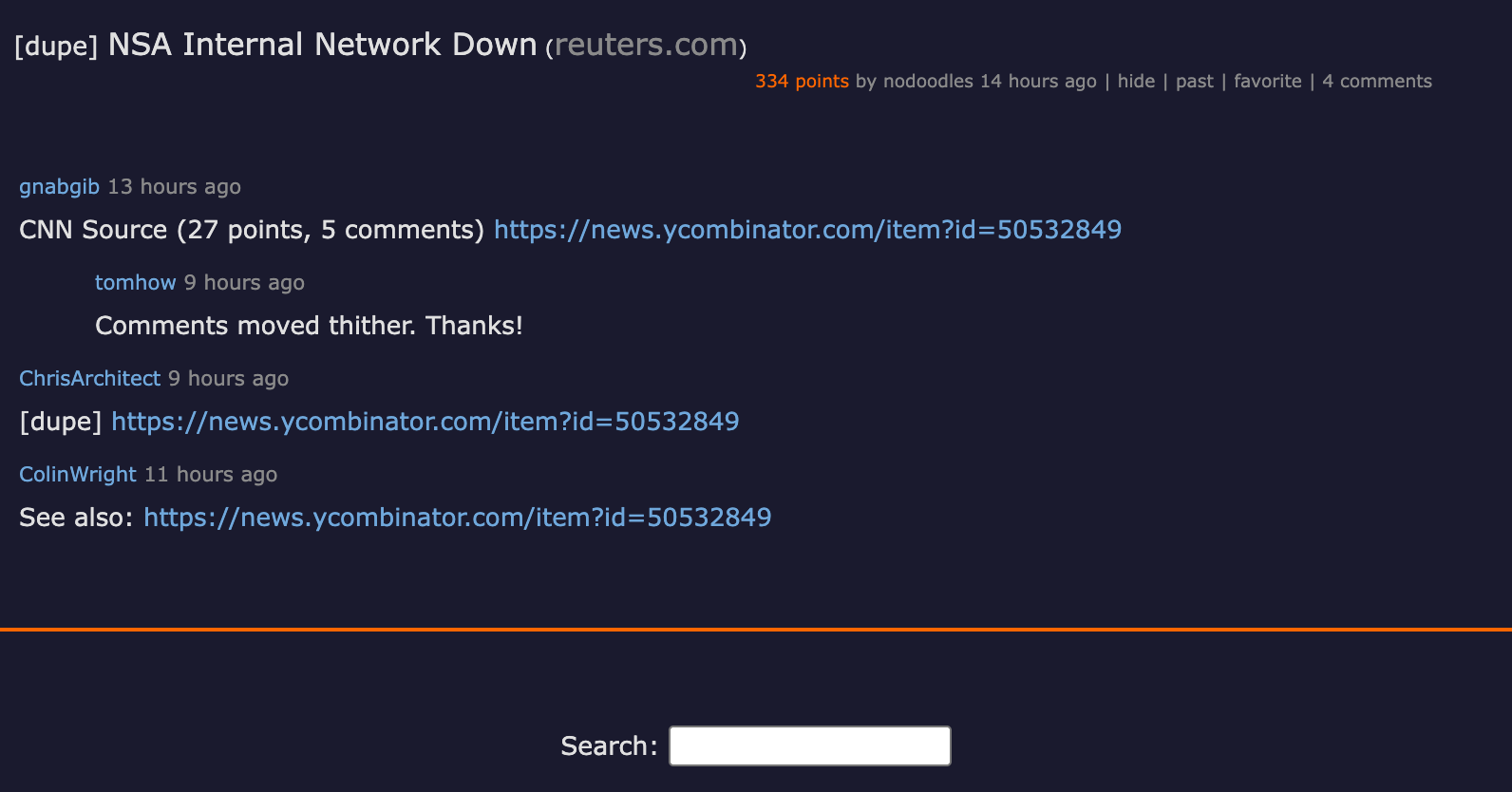
On Tuesday, November 17, CNN reported exclusively that NSANet — the NSA's classified internal communications network — had gone down, forcing the agency to close its Fort Meade campus to most employees.
The NSA attributed the outage to "temporary degradation during scheduled routine maintenance." DNI Jay Clayton reportedly said the outage resulted from applying a software patch for major vulnerabilities discovered the previous month. Bloomberg confirmed that multiple outlets reported no evidence of a cyberattack.
Apple Services (Nov 17)
The same day, iCloud, App Store, and other Apple services experienced an outage. Apple Store employees confirmed they could not process orders, returns, or activate new iPhones. Apple has not publicly disclosed a cause.
The AI Panic: Why People Jumped to Conclusions
With five major failures in five days, the pattern-recognition machinery kicked in hard.
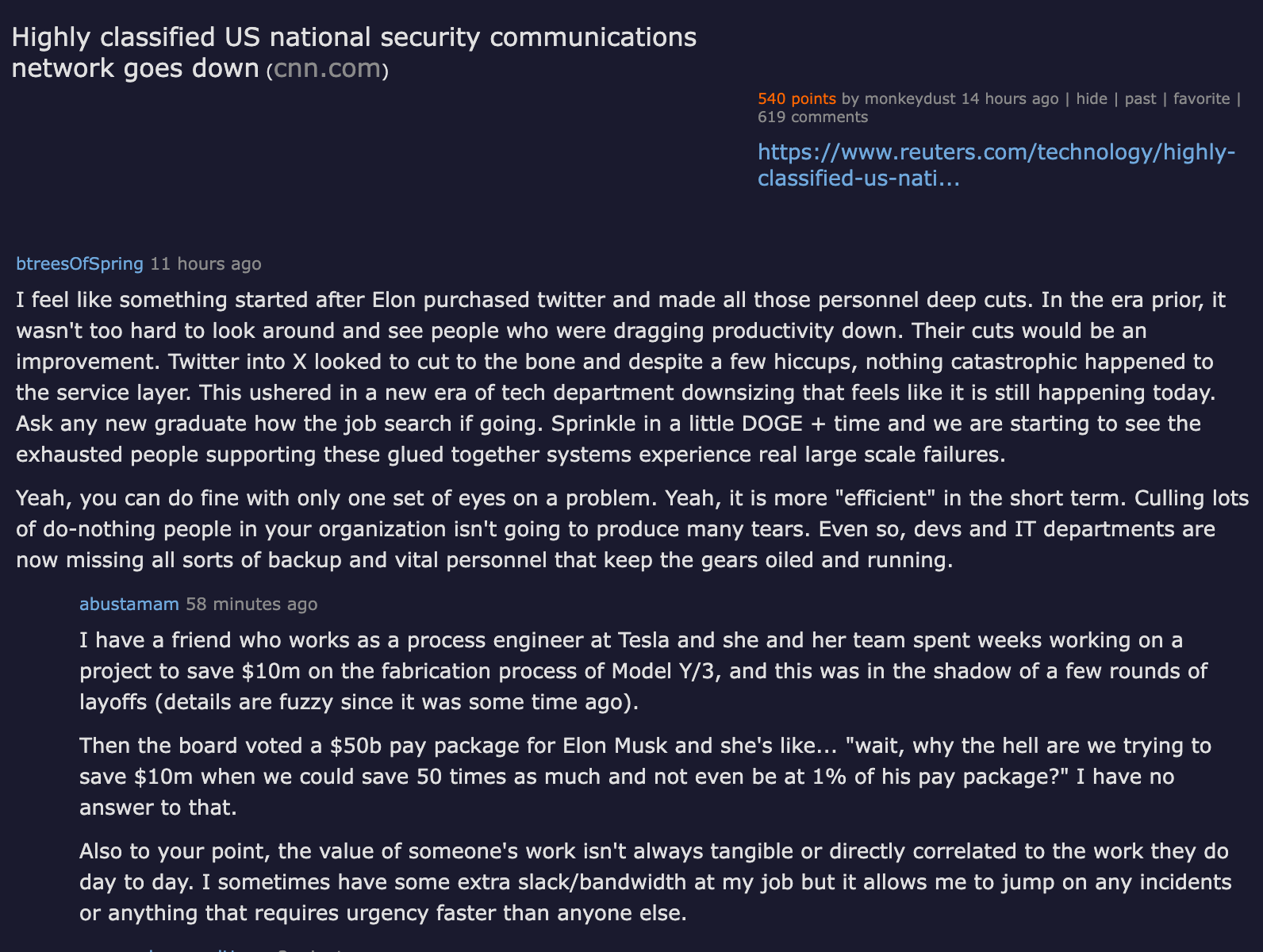
On Hacker News, one commenter captured the mood:
"For me, 2 is coincidence, 3 is a pattern. Now we are at 4: 1. All flights grounded 2. Microsoft outage 3. Optimizely malware 4. Classified NSA network down. I don't know what, but something is clearly happening."
The AI-attack narrative got a critical boost from impeccable timing. On November 16, Google's Threat Intelligence Group (GTIG) and Mandiant published their Q4 AI Threat Tracker with a headline finding: they had observed the first fully autonomous AI-driven vulnerability discovery and exploitation in the wild.
The report describes a framework called exploit_agent, found on an exposed staging server, that connects to multiple large language models and runs the whole loop by itself — spotting weaknesses and writing working exploits without human supervision. GTIG also named open-source offensive frameworks like CAIRN, ARTEX, and PentAGI being deployed by state-linked threat actors from China, Iran, and North Korea.
This is real. It is alarming. And it has nothing to do with why Outlook went down.
The GTIG report describes AI agents that convert security patches into working exploits — a process that requires knowing about the vulnerability first. Microsoft's bug was an internal software defect, not a known CVE being reverse-engineered. The FAA's router flooding was a configuration issue during a physical infrastructure upgrade. The NSA's outage was a patch deployment gone wrong.
Contrarian Corner: The Case for Concern
Dismissing the clustering entirely is also a mistake. Consider:
- Each outage targeted or affected a different sector (email, aviation, retail/web, intelligence, consumer tech)
- Several occurred during maintenance windows or upgrade operations — exactly when systems are most vulnerable
- Google's own report confirms autonomous exploit frameworks exist in the wild right now
- AI-powered reconnaissance scanning for legacy vulnerabilities would produce exactly this pattern of seemingly-unrelated failures
- The NSA, FBI, DNI, DoD, and CISA held a joint call to compare notes — which suggests the intelligence community is at least asking the same question
The absence of evidence is not evidence of absence. But it is also not evidence. The most parsimonious explanation remains: we have been underinvesting in infrastructure for decades, and the bill is coming due simultaneously.
The Real Story: Technical Debt Is the Threat
Strip away the AI panic and a clearer picture emerges. Here is what every outage this week has in common:
Legacy systems under stress. The FAA is running on 25-year-old Cisco routers. Microsoft's bug lived undetected for four months because load testing did not cover the specific failure mode. The NSA's network broke during a patch — the fix itself became the attack vector.
Migration risk. Three of the five outages (FAA, NSA, arguably Microsoft) occurred during or as a consequence of infrastructure upgrades. Copper-to-fiber. Patch deployment. Capacity rebalancing. The most dangerous moment in any system's life is when you are trying to improve it.
Supply-chain trust collapse. Optimizely proves that the third-party script model is fundamentally broken. When 178 organizations trust a single vendor's CDN, compromising one account signup flow gives you access to all of them. This is not an AI problem. It is an architecture problem — and it has been a known risk since the LiteLLM supply-chain attack earlier this year.
Obscurity-as-defense is dead. This is the real lesson, and it holds regardless of whether AI was involved. In a world where autonomous scanning tools exist — whether operated by nation-states, criminals, or AI agents — every unpatched vulnerability, every misconfigured router, every trusted-but-unaudited CDN script is a discoverable attack surface. The GTIG report's most important finding is not that AI attacks exist. It is that the cost of finding and exploiting vulnerabilities just dropped to near-zero for anyone with access to these frameworks.
As one Hacker News commenter put it: "It's clear, there is a screaming need for competent, well-paid IT across all sectors."
What This Means for You
Practitioner Checklist
If you are responsible for infrastructure, here is what this week should change about your priorities:
1. Audit your change management. Three outages this week were triggered by upgrades. If your migration plan does not include automated rollback, canary deployments, and traffic shadowing, you are the next headline. The FAA's 25-year-old routers survived for 25 years. The replacements lasted hours.
2. Inventory your third-party scripts. The Optimizely attack exploited trust. Run document.querySelectorAll('script[src]') on your production pages right now. Every external origin is an implicit trust delegation. Use Subresource Integrity (SRI) hashes, CSP strict-dynamic, and audit your vendors' security posture.
3. Assume your legacy systems are being scanned. The GTIG report means the discovery cost for vulnerabilities is collapsing. Autonomous tools are probing. Whether they caused this week's outages is irrelevant — they will find the same weaknesses. Prioritize patching by exposure, not by severity score.
4. Build observable systems. The FAA did not know a router was flooding at 1,000 connections per 4-5 seconds until flights were grounded. If your monitoring cannot detect anomalous traffic patterns in real time, you will discover problems the same way the FAA did — from the news.
5. Plan for simultaneous failures. This week proved that "this will never happen at the same time as that" is not a risk model. It is wishful thinking. Your disaster recovery plan needs to account for correlated failures — even if the correlation is coincidence.
The Bigger Picture
This is not the first time critical infrastructure has shown cracks. The CrowdStrike outage of 2024 proved that a single bad update could cascade globally. The earlier FAA ground stop coverage showed how thin the margins are in aviation infrastructure. And the Black October nation-state attacks demonstrated that adversaries are already targeting infrastructure at scale. This week's cluster is not a new phenomenon — it is the same phenomenon at higher frequency.
The uncomfortable truth is that both narratives — "it's just technical debt" and "AI is coming for infrastructure" — can be true simultaneously. The mundane causes of this week's outages are well-documented. But those same mundane vulnerabilities are exactly what autonomous AI scanning tools are designed to find.
We are in a window where the attack surface is expanding faster than it is being hardened. That is the actual emergency. Not whether AI caused this particular week of failures, but whether our infrastructure can survive the moment when AI-powered attacks become routine.
Based on what we saw this week, the answer is clearly no.
The week everything broke was not an AI attack. It was a dress rehearsal.
ComputeLeap Team
The ComputeLeap editorial team covers AI tools, agents, and products — helping readers discover and use artificial intelligence to work smarter.
Join the discussion
Have thoughts on this article? Discuss it on your favorite platform:
Related articles
The RAM Oligopoly Is Back in Court
A federal judge denied Samsung, SK Hynix, and Micron's bid to dismiss a DRAM price-fixing suit. Here's what it means.
One Bad Day: The Cloud Concentration Tax
The MS365 outage hit 129K+ Downdetector reports in 20+ hours. It exposes the cloud concentration tax every organization pays but nobody budgets for.
The Week AI Became the Weapon
Anthropic's Claude rooted Linux in 53 minutes. North Korea looted Binance for $6.3B. Cursor shipped a backdoor. What Black October means for defenders.