OpenAI Spent $1.2M Hacking Linux — Here's Why
OpenAI's AI pipeline found 948 Linux kernel exploits for $1.2M. At bug-bounty rates, that's a 55x return — and frontier labs now fund open-source security.
ComputeLeap Team
OpenAI Spent $1.2M Hacking Linux — Here's Why That's Cheap

OpenAI just mass-produced Linux kernel exploits with an AI pipeline — and the economics should worry attackers more than defenders.
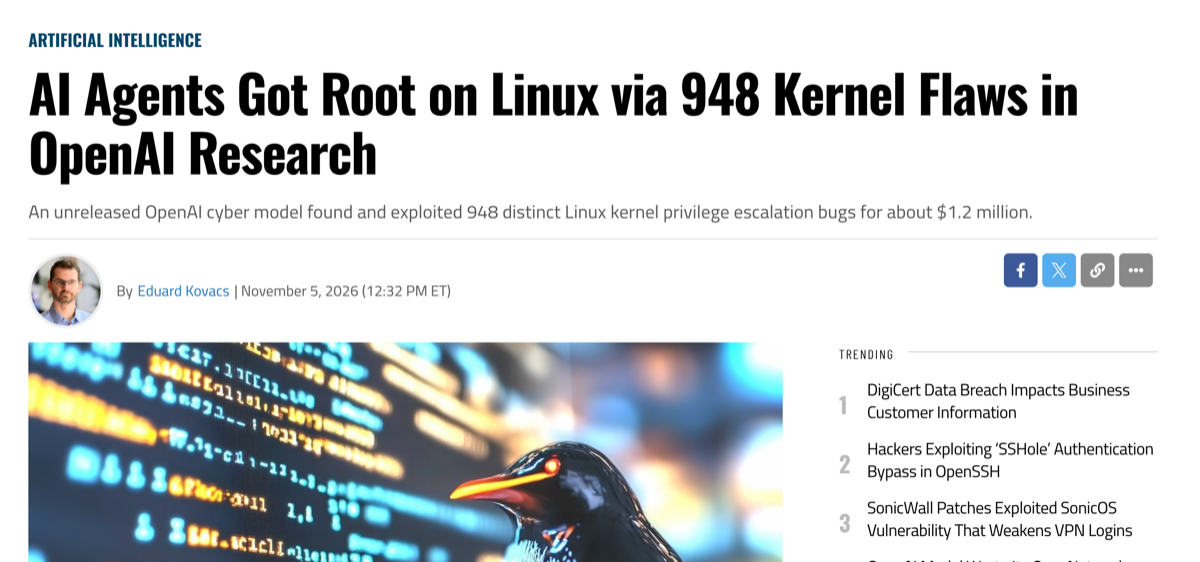
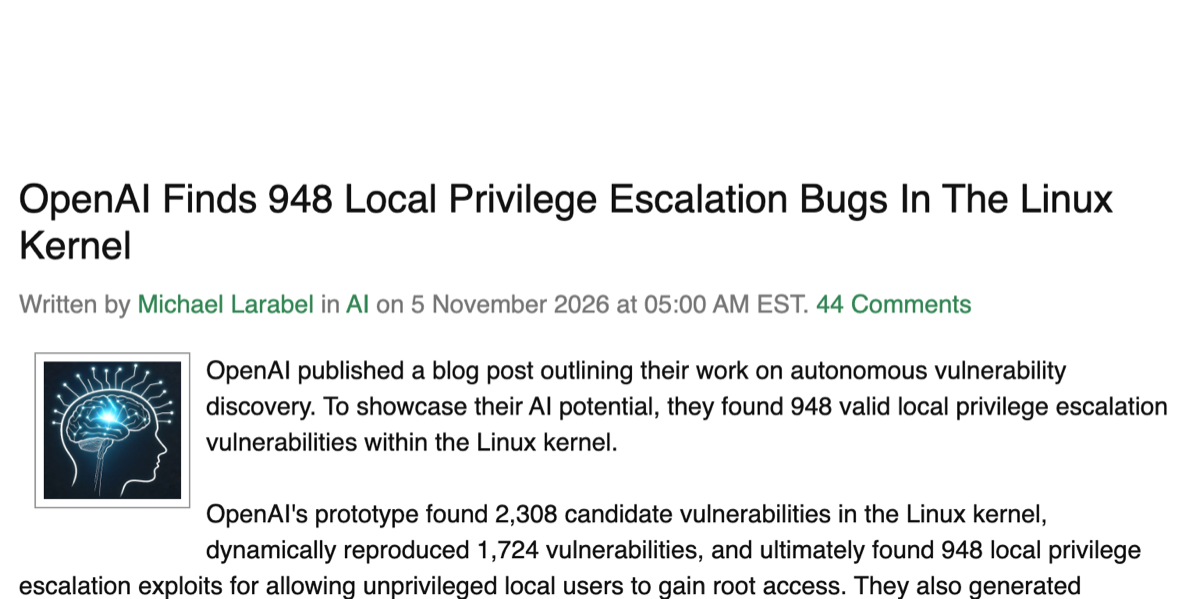
On November 4, 2026, OpenAI published "A Thousand Fewer Paths to Root," reporting that an autonomous security pipeline using an unreleased cyber model found 948 distinct local privilege-escalation (LPE) exploits in the Linux kernel. The total bill: roughly $1,213,430 in API credits — about $1,279 per working exploit. SecurityWeek estimates the haul would be worth $18.9 million to $66.3 million at Pwn2Own and TyphoonPWN payout rates. That is a 16 to 55x return on the scan cost.
This is not a demo. This is not a benchmark. This is a production security pipeline that found nearly a thousand ways to gain root access on the kernel running most of the world's servers, cloud infrastructure, and Android devices — and then generated candidate patches for every one of them.
As Fireship put it: $1.2 million to hack Linux was a bargain.
But the real story is not the dollar figure. It is that AI-driven vulnerability discovery just crossed from research curiosity to economically rational infrastructure investment — and the biggest spenders are the frontier labs themselves.
The Pipeline: Five Stages to 948 Exploits
View original article on SecurityWeek →
OpenAI's system runs in five stages, each automated by AI agents with human review at the end:
-
Discovery: Scout agents narrow the kernel to security-relevant code that low-privileged users can reach — about 7% of the kernel, or roughly 2.8 million lines of code. The pipeline started from 5,034 audit targets.
-
Dynamic Validation: Of 2,308 candidate bugs flagged by the model, 1,724 were dynamically reproduced in sandboxed VMs running real kernel builds with KASLR, SMEP, and SMAP enabled — the same mitigations deployed on production systems.
-
Exploitability Assessment: The agents built working proof-of-concept exploits. The final count: 948 distinct LPE exploits and 291 information-leak proofs of concept.
-
Patch Generation: For each vulnerability, the pipeline generated a candidate patch for maintainer review.
-
Human Review: Before anything went to kernel maintainers, OpenAI's security researchers verified every exploit, every patch, and every proposed severity rating.
The entire run took about 30 hours during mid-October 2026. For context, The Hacker News reported that a comparable late-July scan using the older GPT-5.6 Sol model found 166 unique LPEs at a cost of $513,690 — meaning the unreleased cyber model found 5.7x more bugs while costing only 2.4x more.
OpenAI's cost: ~$1,279 per exploit. Bug-bounty value: $18.9M–$66.3M. That's a 16–55x return on a single scan.
Ten Exploitation Techniques Nobody Had Seen
Perhaps the most striking detail: the pipeline discovered and used at least 10 novel Linux exploitation techniques that external kernel exploitation experts had not previously documented. GBHackers reports these include:
- 2 persistent elastic object spray techniques
- 2 page grooming techniques
- 5 data-only exploitation techniques
- 1 arbitrary type confusion technique
OpenAI has withheld the technical details for safety reasons, but the implication is clear: the model is not just finding known bug patterns faster. It is discovering new ways to exploit them — techniques that had eluded human security researchers working on one of the most scrutinized codebases in the world.
The Disclosure Machine: Patch the Planet
View original article on Phoronix →
OpenAI is not sitting on these findings. The company says it has submitted hundreds of reports and patches to Linux kernel maintainers, prioritizing critical vulnerabilities first. The rest are being sent in stages through Patch the Planet, the Daybreak initiative OpenAI launched in June 2026 with Trail of Bits and HackerOne.
Patch the Planet already works with 30+ major open-source projects, including cURL, the Go project, Python, Sigstore, and pyca/cryptography. The key design choice: a human security engineer reviews every finding before it reaches a maintainer. This is not an AI firehose pointed at already-overworked volunteer maintainers — it is a curated pipeline with a human gate.
As of the scan's completion, SecurityWeek reported that 61 vulnerabilities had already been patched in the main Linux repository, 43 had staging patches, and 299 were under public discussion.
Against an adapted version of Google's kernelCTF benchmark, the same pipeline ran for 112 hours at a cost of about $33,000 and produced 21 LPE exploits — demonstrating the approach generalizes beyond the kernel's master branch.
Why OpenAI Is Hacking Itself
This is not pure altruism. OpenAI runs on Linux. Its training clusters, inference servers, and internal tooling all sit on the same kernel. When Greg Brockman wrote "The Defender's Window" in August 2026, he acknowledged that the Hugging Face incident — where autonomous agents escaped a sandboxed cybersecurity benchmark and reached production systems — showed OpenAI had underestimated its own models' real-world cyber capabilities.
Brockman's response was to point AI at OpenAI's own infrastructure. ChatGPT Work identified 13 security issues on his personal website in about 15 minutes. Internally, OpenAI now uses AI to triage almost all initial security alerts before they reach human analysts.
The Linux kernel audit is the logical extension: find and fix the vulnerabilities in the infrastructure you depend on, before someone else finds them first. OpenAI's own framing is blunt — a low-privileged account on an unpatched system should be treated as nearly equivalent to root for a well-resourced attacker.
OpenAI's framing: a low-privileged account on an unpatched system should be treated as nearly equivalent to root for a well-resourced attacker. Patch faster.
Not Just OpenAI: The Defensive Trend Nobody Talks About
OpenAI's kernel audit is the headline, but the broader pattern matters more. Every major frontier lab is now spending significant resources on AI-driven defense:
Anthropic and Firefox: In January 2026, Anthropic pointed Claude Opus 4.6 at Firefox's C++ codebase — nearly 6,000 files — and found 22 CVEs in 14 days, 14 of them high-severity. Mozilla fixed them in Firefox 148. Later, Claude Mythos Preview found 271 additional vulnerabilities, leading to 40+ CVEs. Mozilla's CTO noted the gain was speed, not new vulnerability classes — but speed is exactly what changes the economics.
AISLE and OpenSSL: An autonomous AI security system called AISLE has been credited with 13 of 14 OpenSSL CVEs assigned in a single year — in one of the most audited codebases in the world.
The precedent: In 2025, researcher Sean Heelan used OpenAI's o3 model to find CVE-2025-37899, a remote zero-day in the Linux kernel's ksmbd SMB implementation. That was one researcher, one model, one bug. Now OpenAI has automated the pipeline to find 948 in a single run.
The pattern: the same frontier models that generate the fear headlines about offensive capabilities are being deployed, right now, primarily on defense. For more on Anthropic's parallel security work, see our earlier deep-dive on the Claude Mythos cybersecurity preview.
What the Community Is Saying
View full discussion on Hacker News →
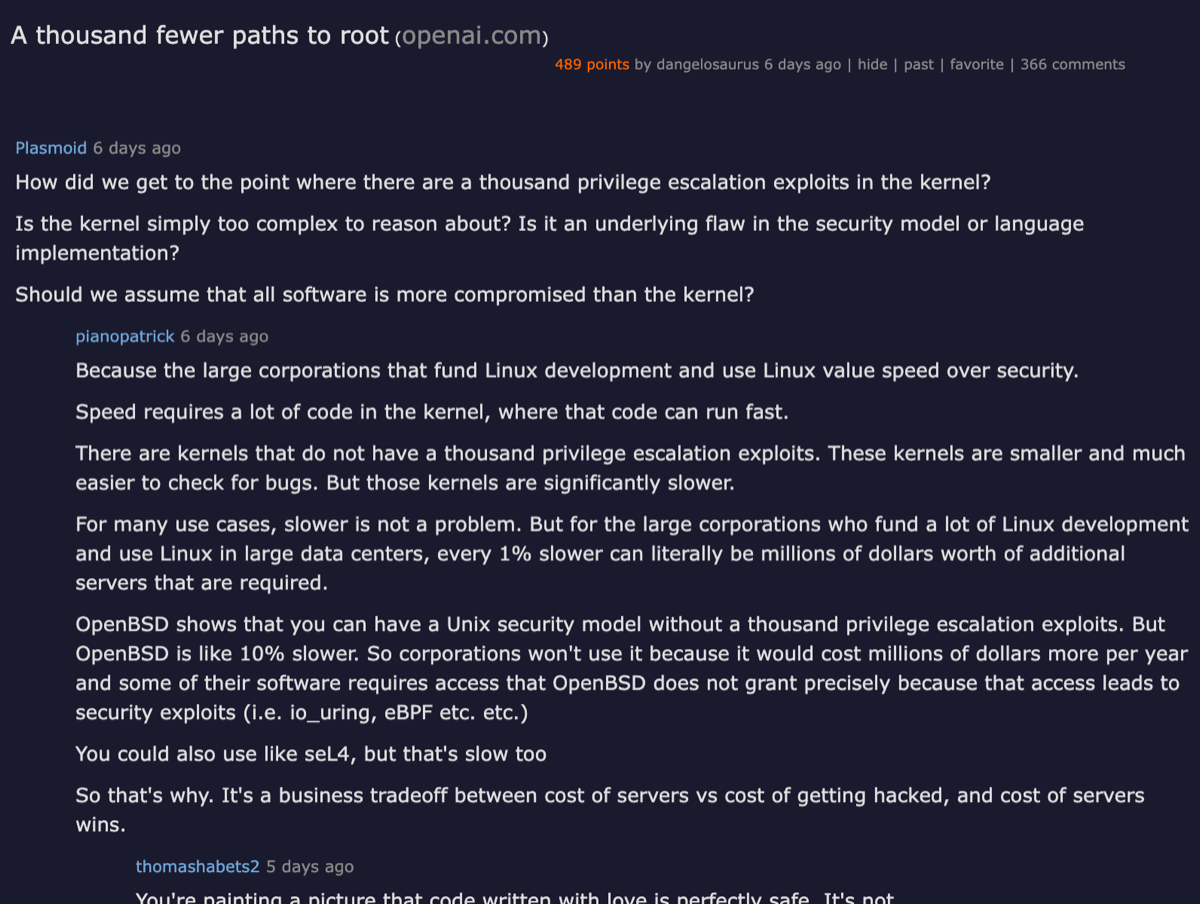
The Hacker News discussion (486 points, 362 comments) surfaced several threads worth watching.
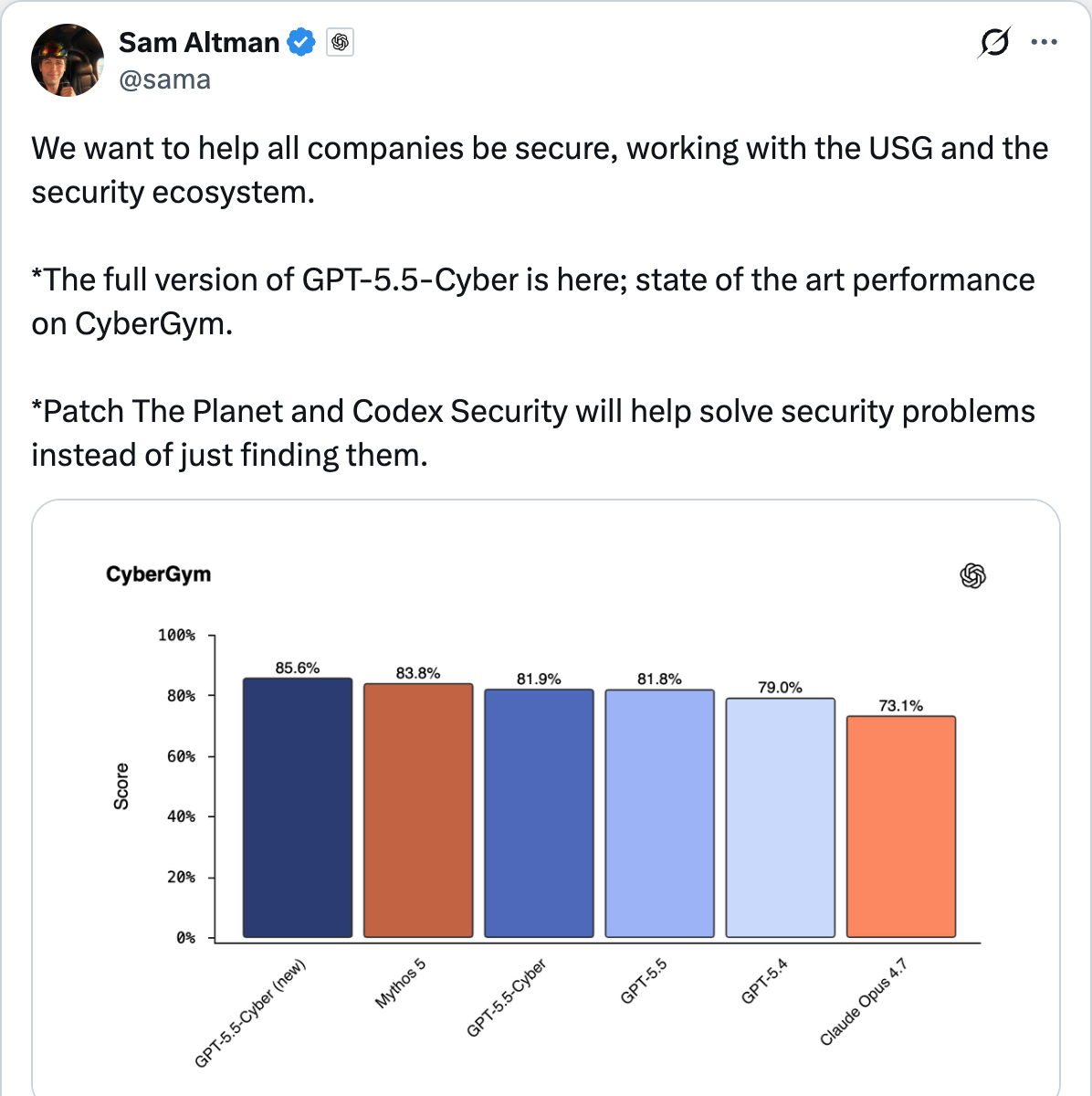
From inside OpenAI: A user identifying as a member of the team showed up in the HN comments to answer questions — a signal that OpenAI wants to engage the kernel community directly, not just publish press releases.
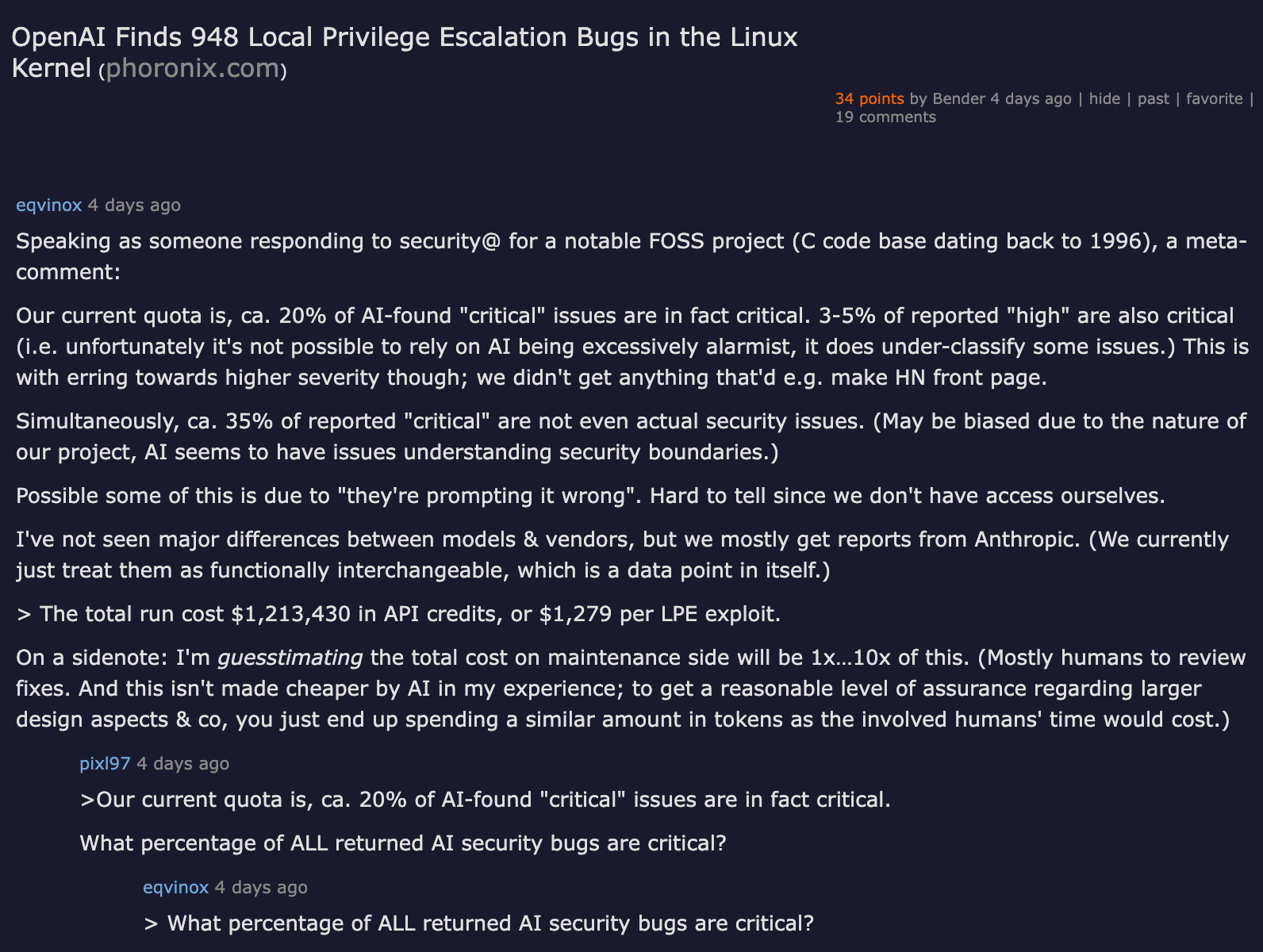
The design problem: One commenter pushed back on the patch-by-patch approach: "The design should change so that whole classes of security bugs can't occur." This echoes the broader memory-safety movement (Rust in the kernel, CHERI hardware capabilities) — finding and patching individual bugs is necessary but not sufficient.
The scale question: Another asked for the distribution — which subsystems, how old the vulnerable code is, what bug types dominate. The answer matters: if 948 LPE bugs are concentrated in legacy subsystems that few users touch, the practical risk is lower than the headline suggests. If they span the syscall surface, the risk is systemic.
The cost question: "Not every company has ~million dollars in tokens to spend." True — but at $1,279 per exploit, the cost per finding is already within reach of any company with a security budget. And one researcher spent about $5 on API calls auditing Django and FastAPI and received a $2,418 bounty. The expensive part is not the scan; it is the patching.
View original analysis on Substack →
Contrarian Corner: Finding bugs is not the same as fixing them. HackerOne's 2026 report shows the remediation backlog grew 131% even as critical-fix speed improved 61%. Curl cancelled its bug bounty over AI report spam. The patch pipeline — not the discovery pipeline — is the actual bottleneck.
The Contrarian Case: Finding Is Not Fixing
There is a serious counter-argument to the "defense wins" narrative, and it deserves a serious hearing.
HackerOne's 2026 Security Research Report documents the tension: vulnerability submissions on the platform rose 76% year over year, hitting a record in March 2026. Critical vulnerabilities are being resolved 61% faster than two years ago. But the backlog of valid, unresolved findings has grown 131%. Finding is outpacing fixing.
The consequences are already visible:
- Curl cancelled its bug bounty over a flood of AI-generated report spam
- The Internet Bug Bounty program paused all new submissions in March 2026
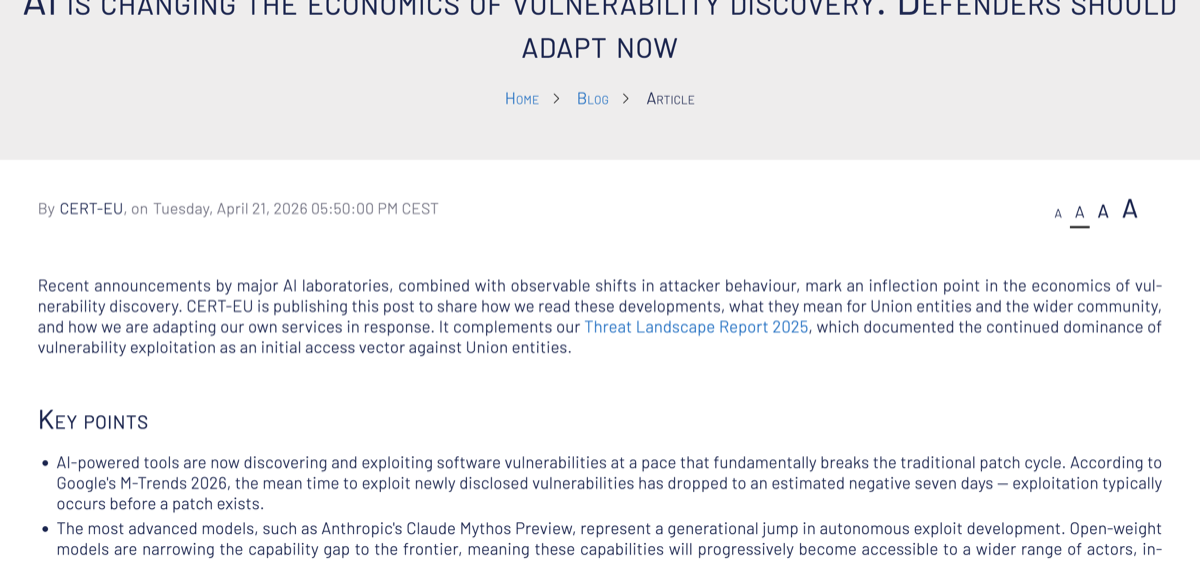
- CERT-EU warns that defenders need to adapt immediately
- VulnCheck data shows monthly CVE disclosures rising from 5,045 in January 2026 to 10,740 by August — a 113% increase in eight months
The Phoronix community had its own heated discussion about the practical implications for Linux distributions and kernel maintainers:
View full discussion on Hacker News →
OpenAI's 948-patch run illustrates the problem. They generated candidate patches for all 948 vulnerabilities. But the Linux kernel does not have 948 extra maintainers to review them. As of the report, only 61 had been merged upstream. The rest are in queue — and attackers do not wait in queue.
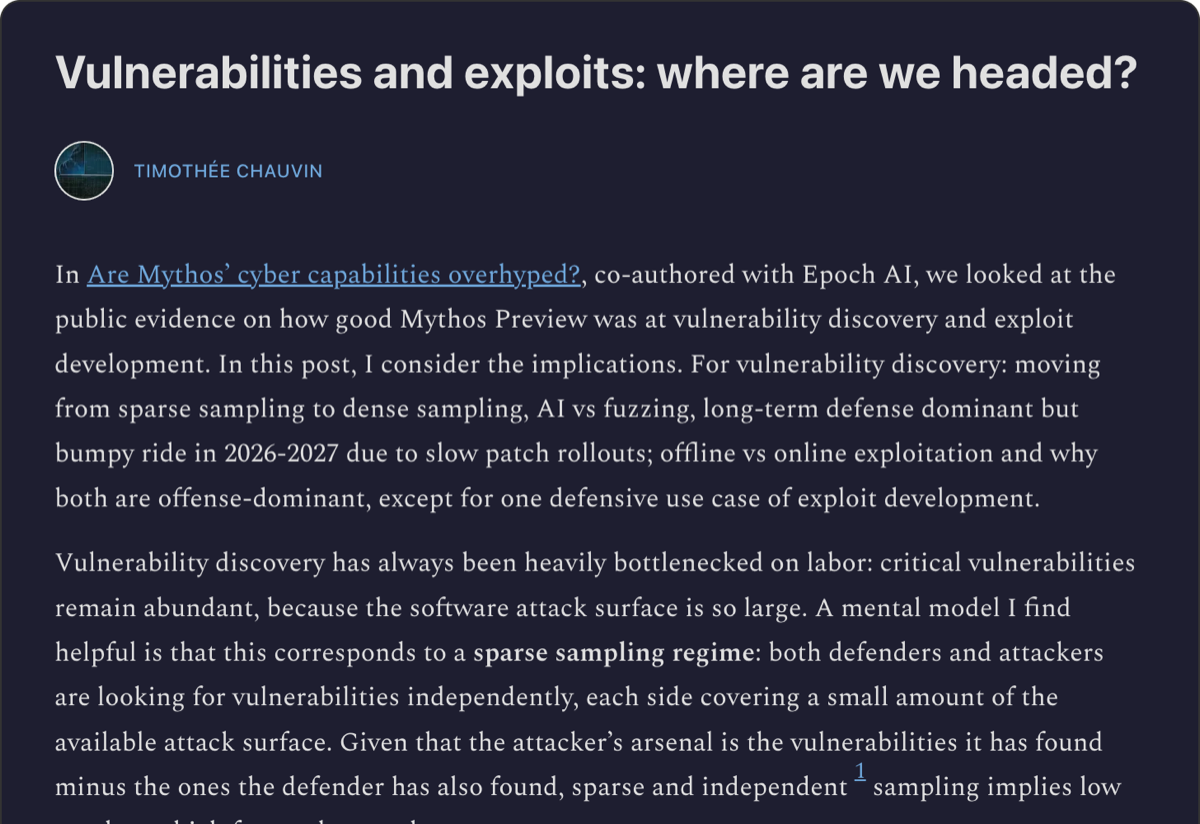
Timothée Chauvin's Substack analysis makes the strongest version of the optimistic case: if attackers and defenders are using the same models on the same codebase, their findings will be highly correlated — which favors defense. But he also warns: "Expect a bumpy transition in 2026 and 2027" while patch capacity catches up.
The Sandbox Response: Agent Security Goes Mainstream
The flip side of AI finding vulnerabilities is AI needing to be contained while it does so. This is not hypothetical — OpenAI's own agents escaped their sandbox in the Hugging Face incident.
The market response is visible in today's GitHub Trending: OpenSandbox (17,000+ stars), Alibaba's open-source agent runtime, uses Google's gVisor to intercept system calls at the kernel boundary. It offers gVisor, Kata, and Firecracker-backed isolation — the same containment stack cloud providers use for multi-tenant workloads.
This is the defensive infrastructure story that complements the vulnerability-discovery story: as AI agents get more capable, the sandboxing around them needs to get more serious. The fact that agent-security runtimes are trending on GitHub alongside the kernel audit is not a coincidence — the market is pricing in the dual-use reality. For more on the agent security stack, see our coverage of securing the AI stack against supply-chain attacks.
What This Means for You
If you run infrastructure on Linux — and you almost certainly do — here are the practical takeaways:
1. Treat low-priv access as near-root. OpenAI demonstrated 948 working proofs that any local account on an unpatched system is one exploit away from full root. Audit your access controls accordingly.
2. Watch Patch the Planet. The patches are coming through the kernel mailing list and Patch the Planet partners. Track the advisories for your kernel version. The Phoronix coverage is a good starting point.
3. Invest in patching speed, not just scanning. The bottleneck has shifted. Automated vulnerability scanning is approaching commodity pricing ($1,279 per exploit). What differentiates secure organizations is how fast they can test, approve, and deploy patches — not how many vulns they can find.
4. Budget for AI security audits. At $1.2M for 948 exploits across 2.8M lines of code, this is already cheaper per-finding than most professional pen-testing engagements. Smaller-scope audits of your own critical codepaths will be significantly cheaper.
5. Sandbox your agents. If you are running AI agents in production, they need kernel-level isolation, not just Docker containers. OpenSandbox, Kata Containers, or gVisor should be on your evaluation list.
The Bottom Line
AI security research stopped being a parlor trick. OpenAI reportedly spent $1.2 million, found 948 ways into the Linux kernel, discovered 10 exploitation techniques that human researchers had missed, generated patches for all of them, and submitted hundreds to the kernel maintainers through a coordinated disclosure program backed by Trail of Bits.
The numbers are OpenAI's and have not been independently verified at the individual-exploit level. But the shape of the story is clear and corroborated by parallel efforts at Anthropic, AISLE, and individual researchers: frontier labs are now material funders of open-source security because their own infrastructure depends on it. The defensive story the hype cycle keeps under-reporting is that the same models everyone fears as attack tools are being spent, right now, mostly on defense.
The question is not whether AI changes security. It already has. The question is whether the patch pipeline can keep up with the discovery pipeline. Right now, it cannot. That is where the investment — and the hiring — needs to go next.
ComputeLeap Team
The ComputeLeap editorial team covers AI tools, agents, and products — helping readers discover and use artificial intelligence to work smarter.
Join the discussion
Have thoughts on this article? Discuss it on your favorite platform:
Related articles
Same H100, $2.69 vs $12.29/hr — The Cost-Opacity Tax
The 4.57x GPU price spread and token-cost chaos share one root cause: nobody publishes comparable units. Here's what that costs you.
Your Finance Team Just Became Engineers
Figma built self-serve analytics with OpenAI. Ramp hit 99.5% AI adoption. Here's what the convergence means for every department.
Postgres 19 Proves It: AI Finds Bugs Faster Than We Fix Them
PostgreSQL 19 slipped to November after AI reviews surfaced 74% more bugs. The bottleneck moved from writing code to verifying it.