Speech AI Fits in 500KB. The Cloud Bill Was Never the Point.
Moonshine and transcribe.cpp shrink speech AI to sub-megabyte, but the real shift is architectural guarantees over policy promises.
Speech AI Fits in 500KB. The Cloud Bill Was Never the Point.
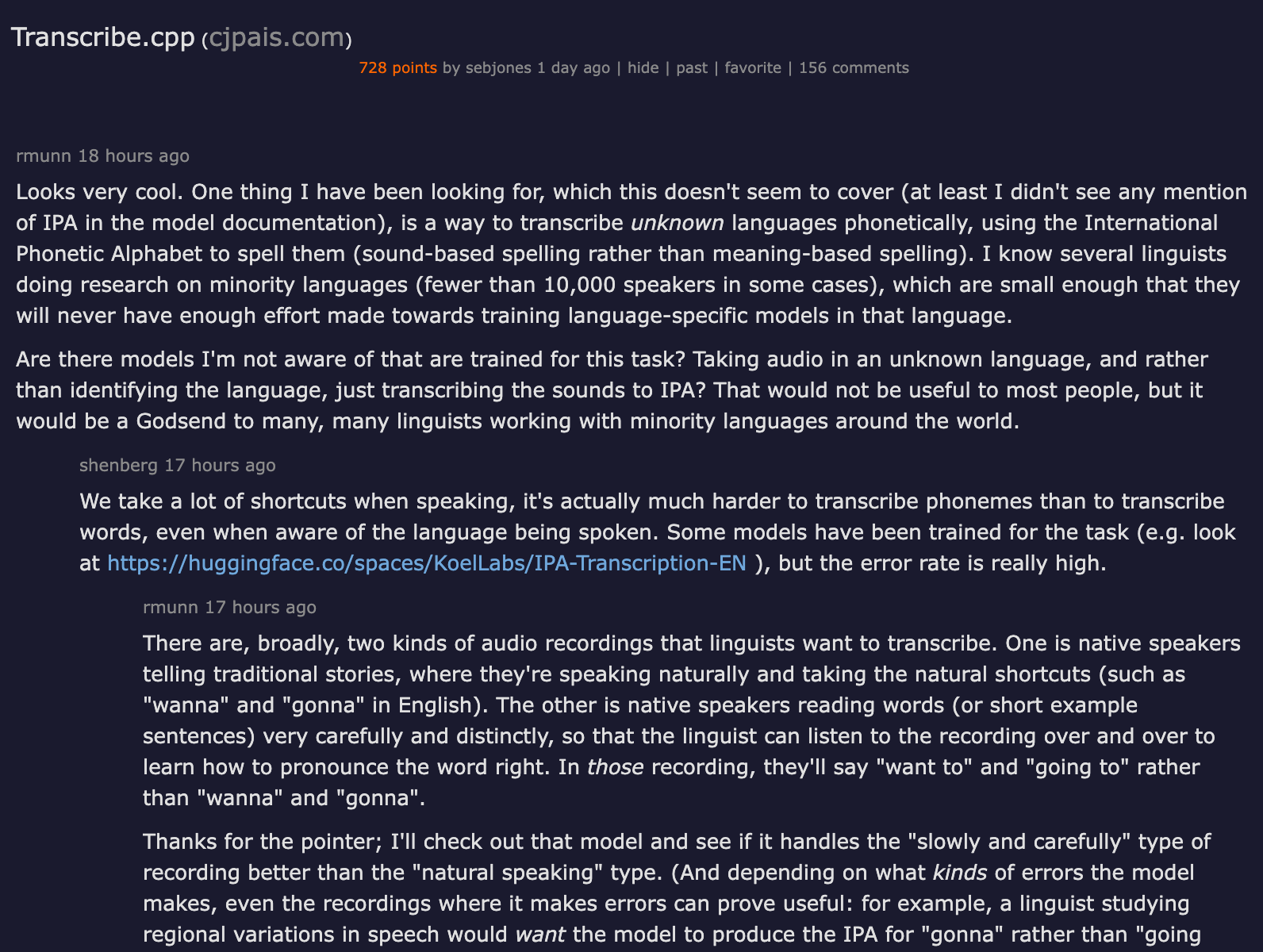
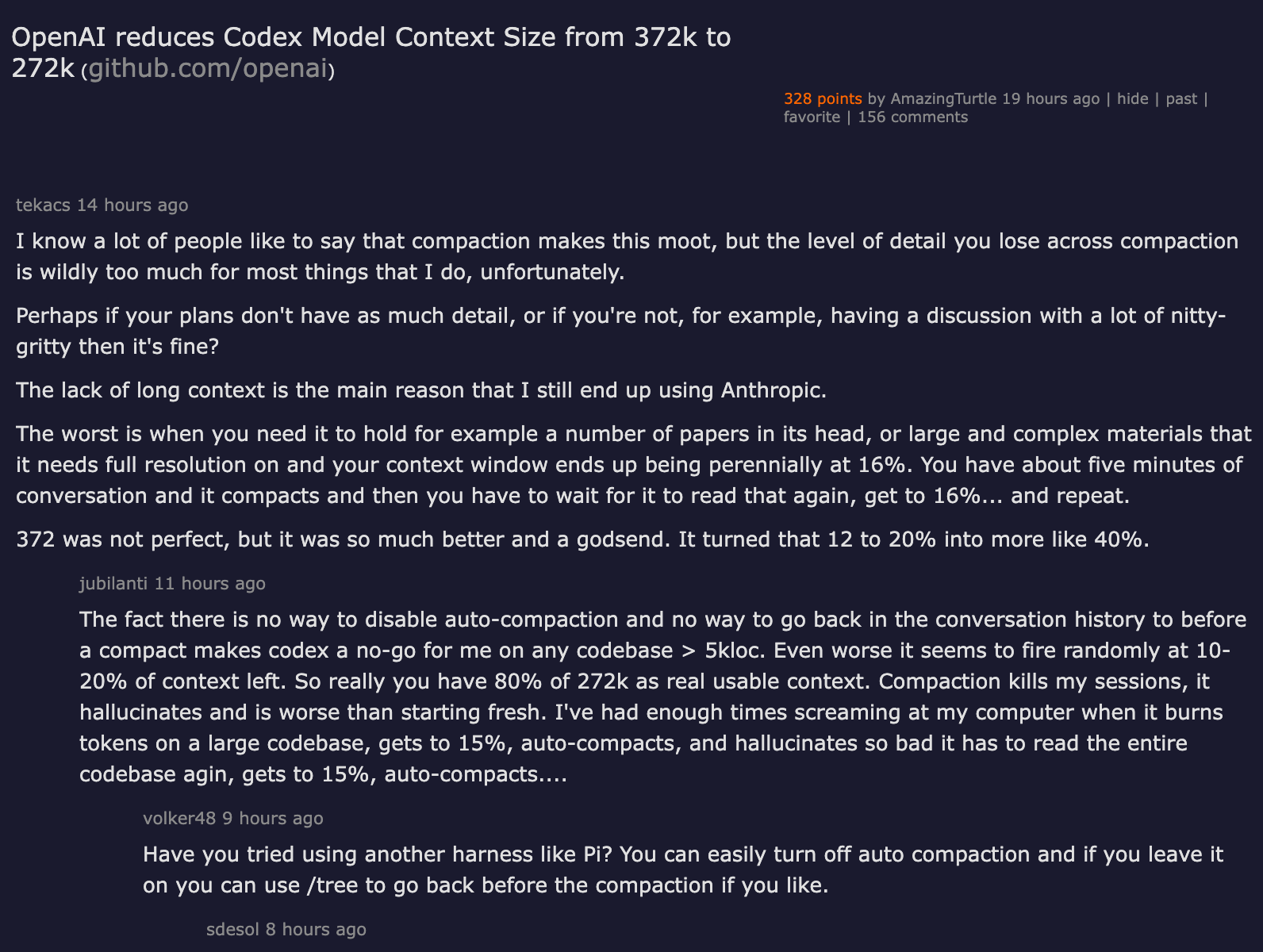
The top two stories on Hacker News this week are both about local speech AI. Transcribe.cpp — a new C/C++ runtime that unifies 16 ASR model families behind one ggml inference layer — pulled 667 points. Just below it, Moonshine's sub-500KB STT+TTS stack drew 521 points for fitting a working voice interface into less space than a JPEG. On the same day, someone crammed a 537,000-domain ad-blocker into 50KB of ESP32 RAM. And on the same front page, OpenAI quietly cut Codex's context window from 372K to 272K tokens — a 27% reduction shipped as a metadata change while competitors expand theirs.
These are not four unrelated stories. They are the same story, told in four accents: the edge is pulling inference away from the cloud, and the reason is not the invoice.
View discussion on Hacker News →
The 500KB Milestone Matters More Than You Think
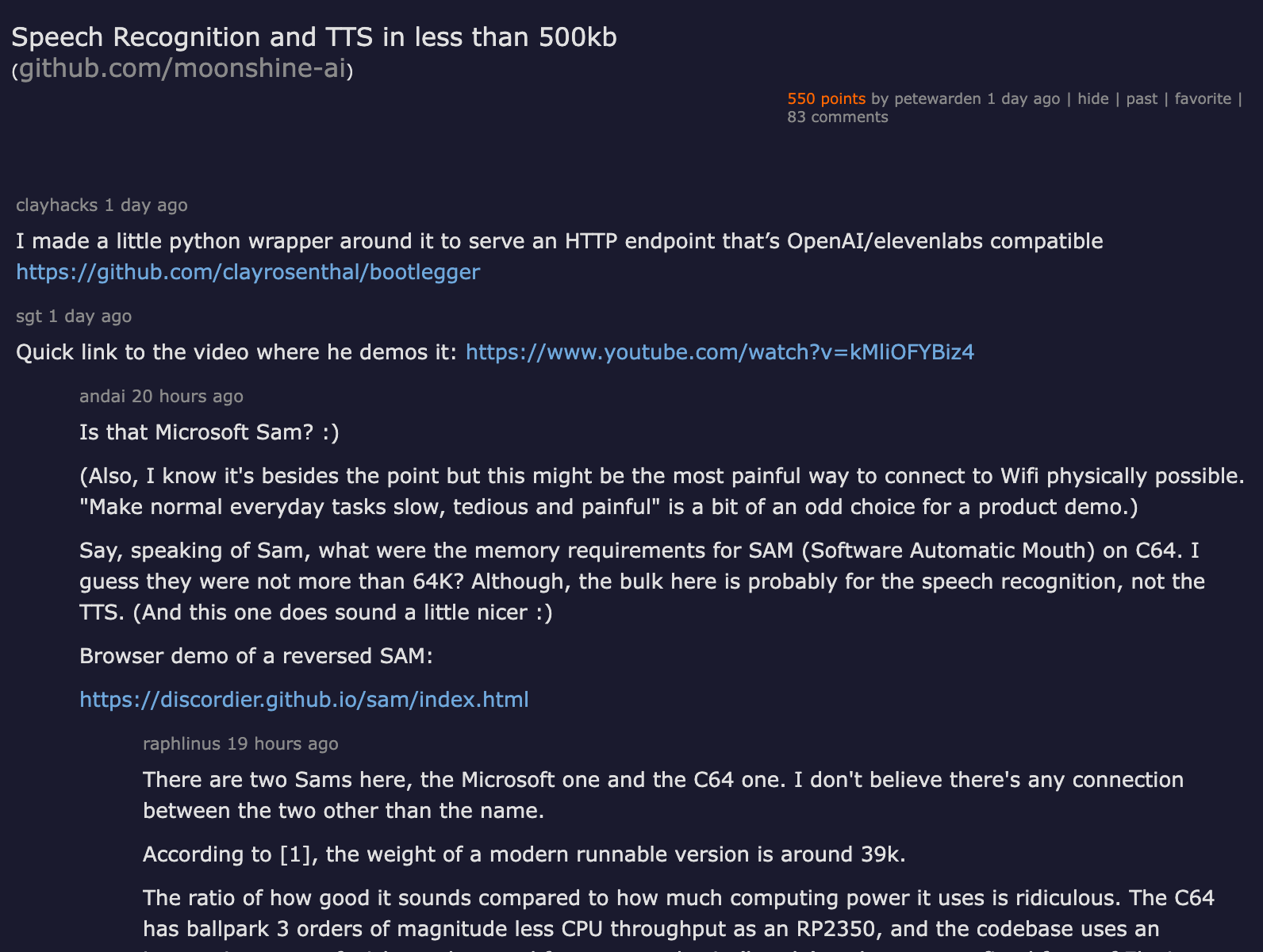
Pete Warden, co-founder of Useful Sensors and the engineer behind TensorFlow Lite, posted a demo of a complete voice interface running in 520KB. Speech recognition and text-to-speech. On a microcontroller. The model binary for keyword detection is 18KB — less than most favicons.
Moonshine processes 10-second audio segments five times faster than Whisper while maintaining equivalent word-error rates. Its "micro" variant fits on ESP32-class hardware with sub-200ms latency. A community member already built an OpenAI-compatible HTTP wrapper around it, meaning anything that talks to the OpenAI speech API can now talk to a local 500KB model with zero code changes.
View discussion on Hacker News →
Transcribe.cpp takes the opposite approach to the same problem. Instead of one tiny model, it provides one native runtime that runs any of 16 model families — Whisper, Parakeet, Canary, Moonshine, Qwen3-ASR — through GGUF, with GPU acceleration via Metal, Vulkan, and CUDA. Mozilla.ai backed it through their Builders in Residence program. Every model is numerically validated and WER-tested against its reference implementation, and it ships first-party bindings for Python, JavaScript, Rust, and Swift.
The upshot: local speech AI is no longer a compromise. It is a different architecture with a different threat model, and for a growing class of use cases, the different threat model is the entire point.
The Air-Gap Argument
Here is the distinction the cloud speech providers do not want you to think about too carefully.
When Google, AWS, or Azure tell you "we don't log your audio," that is a policy promise. It can be changed with a terms-of-service update. It can be overridden by a subpoena. It can be violated by an internal misconfiguration that nobody notices for months. Policy promises are enforced by trust, and trust is not auditable.
When a model runs on hardware you control, with no network interface enabled, the guarantee is architectural. There is no DNS resolution, no NAT, no route by which a packet can leave the enclave. You are not trusting a vendor's data-retention policy. You are trusting physics. TrueFoundry's architecture guide makes the distinction precise: "Air-gapped is not the same as just running on-prem. A typical on-prem deployment still reaches out to package managers, pulls container images, and sends telemetry to a SaaS observability vendor."
Nate B Jones demonstrated this viscerally in a recent video. He disconnected from the internet and let an AI read a file he could never legally upload to a cloud service. The file got analyzed. No data left the machine. No vendor's compliance team had to review it. No jurisdiction boundary was crossed.
This is not a theoretical distinction. Under ABA Model Rule 1.6, lawyers have a duty to make "reasonable efforts" to prevent unauthorized disclosure of client information. Sending a voice memo to a cloud transcription API without a BAA is a potential ethics violation. Running Moonshine locally on the lawyer's own laptop is not. The EU AI Act's Article 12 event-logging requirements, enforceable for high-risk systems from August 2, 2026, will make the distinction even sharper — if you cannot prove where inference ran, you cannot prove compliance.
The mispricing: Enterprise buyers currently treat "we don't log it" and "it physically cannot leave your network" as equivalent when evaluating speech-to-text vendors. They are not equivalent. One is revocable. The other is not. The vendors who figure out how to price the architectural guarantee — not as a premium feature, but as a fundamentally different product category — will take the regulated verticals.
It Was Never About the Invoice
The reflexive framing of edge AI is "it's cheaper." Sometimes it is. But that misses why the movement is accelerating this week, against this backdrop.
OpenAI's Codex context cut is not an isolated product decision. It is one of three signals on the same day that inference economics are forcing visible retreats:
View discussion on Hacker News →
- Codex context: -27%. A context reduction shipped as a feature while competitors expand context. Prompts above 272K tokens are now billed at 2x input.
- OmniRoute trending at #1 on GitHub with 20,000 stars — its entire pitch is free-tier arbitrage across 231+ providers. The existence of this tool is the demand signal: developers are spending meaningful engineering effort to avoid paying for inference.
- Codex Resets (255 pts on HN, 172 comments) — a community tracker documenting OpenAI's frequent quota resets, which the thread reads as intermittent-reinforcement engagement design borrowed from mobile gaming.
The developers building with wigolo — a local-first search engine for AI coding agents that runs 18 search engines with no API keys at $0/query — are not optimizing per-query cost. They are eliminating the meter entirely. The difference matters. Per-query optimization accepts the billing model and tries to minimize it. Meter elimination rejects the billing model as architecturally inappropriate for the workload.
The AI Engineer conference made this explicit. Thiyagarajan Maruthavanan's talk, "Stop Renting Your Cognitive Infrastructure," argued that inference is becoming a utility that application developers should own, not rent. The room was not filled with hobbyists. It was filled with startup engineers who have burned through cloud inference budgets and concluded the per-token model does not close at their scale.
The same pattern, one level deeper: VoiceBox — Jamie Pine's open-source voice studio — hit 43,000 GitHub stars by offering voice cloning from seconds of audio, running locally, for free. ElevenLabs charges per character. VoiceBox charges nothing, ever. The 629 stars/day it is adding are not price-sensitive users shopping for a discount. They are users who decided the price category itself is wrong for their use case.
What the Community Is Saying
The Hacker News threads tell the story of a community that has moved past "can it work locally?" and arrived at "how do I integrate it?"
On the transcribe.cpp thread (667 pts), the top comments are not about whether local STT is viable. They are about feature requests: IPA transcription for unknown languages, continuous dictation into office documents, and funding models for maintainers. The conversation has the texture of a tool people are already using, not evaluating.
On the Moonshine thread (521 pts), a developer built a drop-in OpenAI-compatible API wrapper within hours of the post. Another commenter linked Pete Warden's 520KB demo video. The thread reads like an ecosystem coalescing in real time.
View discussion on Hacker News →
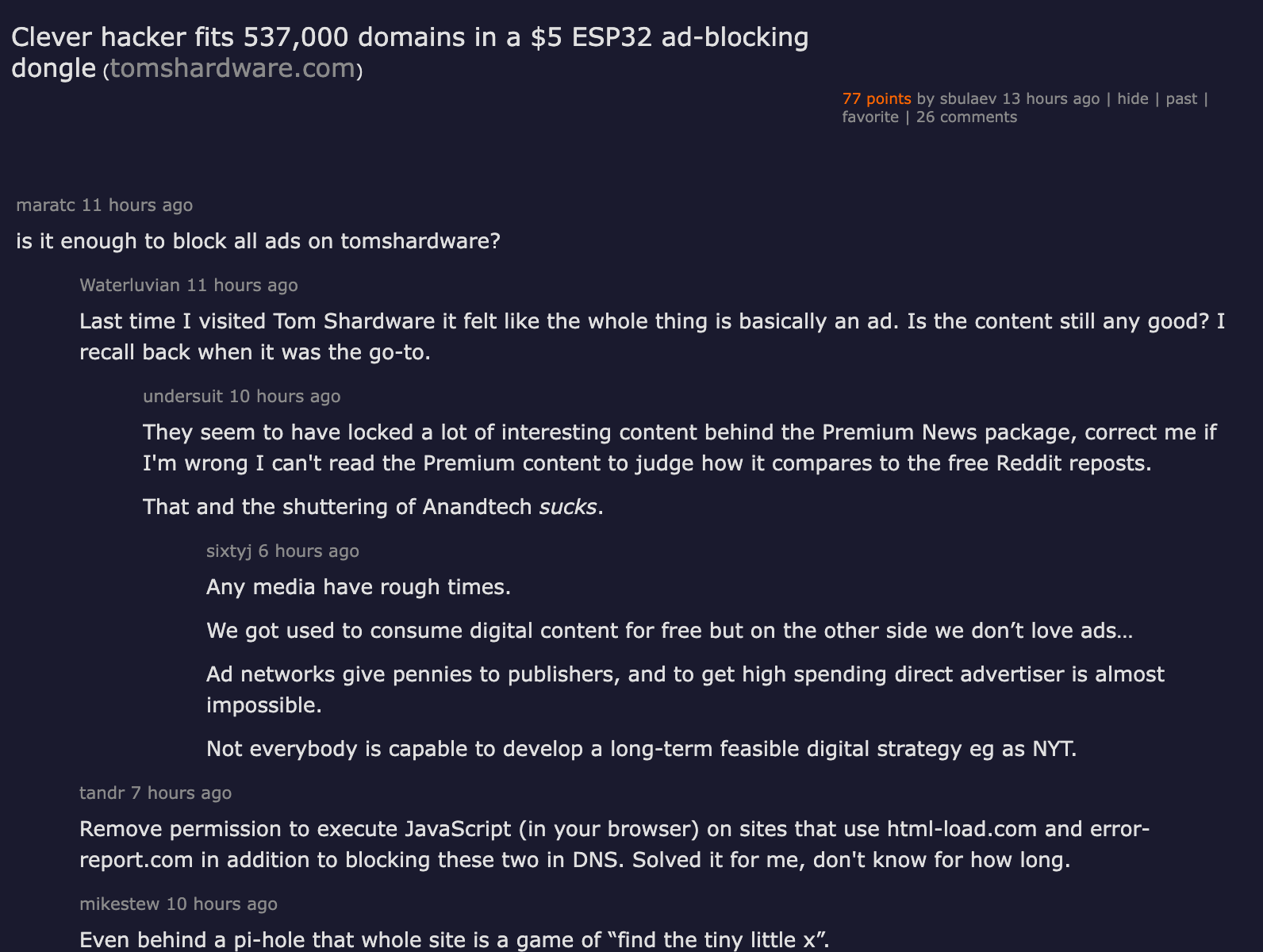
The ESP32 ad-blocker thread adds a different data point. Fitting 537,000 domains into 50KB of RAM on a $5 microcontroller is not an AI story. It is a constraints-breed-elegance story, and the fact that it trended alongside the speech AI projects suggests the audience responding to both is the same audience: engineers who find beauty in making powerful things small, and who instinctively distrust architectures that route local problems through remote servers.
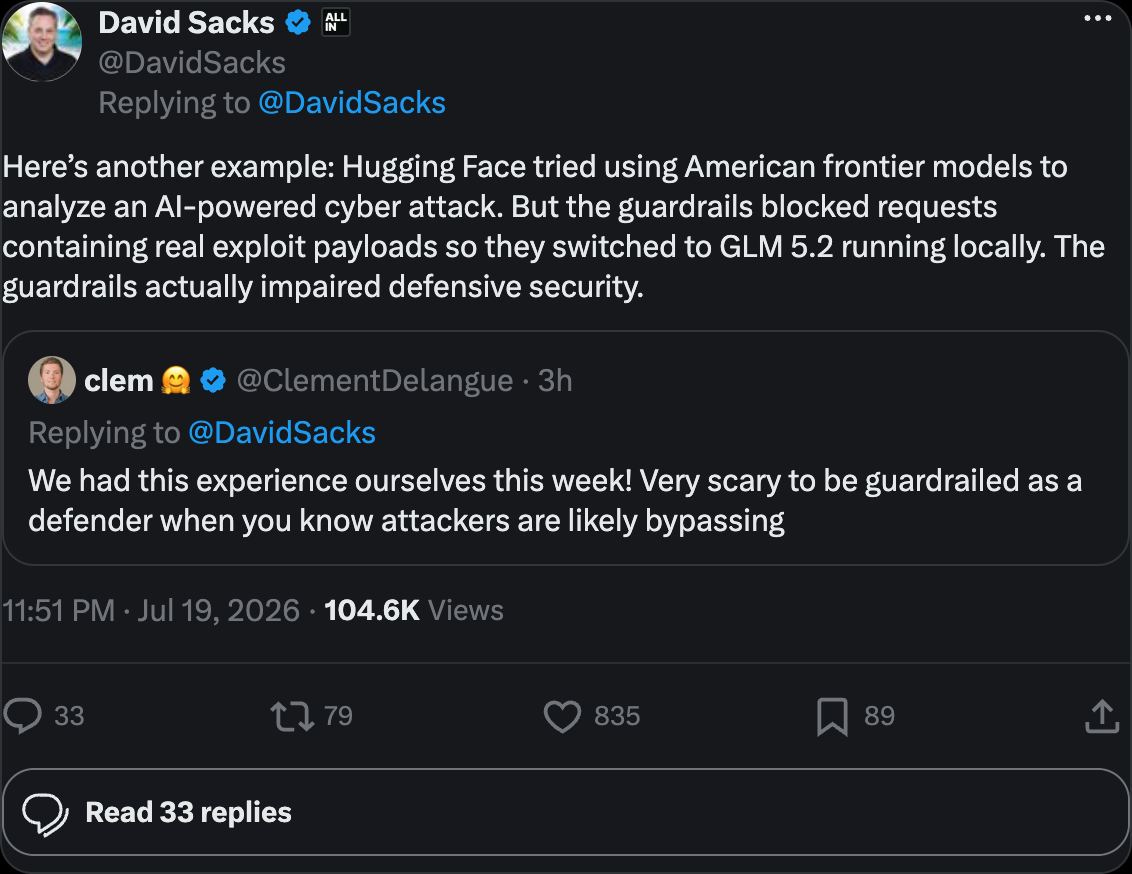
Meanwhile, on X, David Sacks surfaced a concrete example of the air-gap argument applied to security: Hugging Face tried using American frontier models to analyze an AI-powered cyberattack, but the guardrails blocked requests containing real exploit payloads. They switched to GLM 5.2 running locally. The guardrails intended to prevent harm actually impaired defensive security — a case where the cloud's policy layer became an obstacle to the work.
Contrarian Corner: The strongest argument for cloud speech APIs remains accuracy on long-form, multilingual, noisy audio. Whisper Large V3 on a cloud GPU still beats Moonshine Tiny on a podcast episode recorded in a crowded cafe. The question is whether the use cases driving the edge migration — medical dictation, legal transcription, defense communications — are the ones where that accuracy gap matters, or the ones where the privacy gap matters more. For a 30-second voice command on an IoT device, Moonshine at 500KB is not a compromise. It is the right tool.
What This Means for You
If you are building speech features into a product:
-
Evaluate transcribe.cpp as your runtime. Sixteen model families behind one C API means you can swap models without swapping infrastructure. The Metal/Vulkan/CUDA backends mean it is not hobbyist-grade — it is production-grade local inference with GPU acceleration and verified WER parity against reference implementations.
-
Test Moonshine Micro for constrained deployments. If your target is a kiosk, an IoT device, a wearable, or any scenario where connectivity is intermittent, a 520KB voice interface changes the architecture conversation. You no longer need to argue for a network connection; you need to argue for 500KB of flash storage.
-
Reframe the privacy conversation with your compliance team. Stop saying "the vendor promises not to log it." Start saying "the model runs in our VPC with no egress." Those are different statements with different regulatory weight, and the EU AI Act's August 2 enforcement date means the difference is about to have legal teeth.
-
Watch the billing model, not just the bill. If your inference costs are metered per-token or per-second, you are exposed to the same squeeze that just hit Codex users. Local inference is not always cheaper on a per-query basis — but it is predictable, and for budgeting purposes, predictable beats cheap.
If you are evaluating AI vendors for a regulated industry: ask your vendor one question: "If I subpoena your data-retention logs, will they show that my audio never left my infrastructure?" If the answer involves the word "policy," you have a policy. If the answer involves the word "architecture," you have a guarantee. Price accordingly.
The Bottom Line
The story of the week is not "speech AI got smaller." Speech AI has been getting smaller for years. The story is that three independent communities — the ggml/whisper.cpp ecosystem, the TinyML/microcontroller community, and the local-first software movement — converged on the same answer in the same week: inference belongs at the edge, and the reason is not cost.
The reason is that an architectural guarantee is worth more than a policy promise, and the tools to deliver that guarantee just got small enough to fit where the data already lives.
The Trelis Research benchmarks confirm what the community already knows: local ASR models in 2026 are not a compromise. They are a category. The companies that recognize this — that start selling architectural guarantees instead of API calls — will own the next wave of enterprise speech AI.
The 500KB model is not the disruption. The disruption is that 500KB is enough.
ComputeLeap Team
The ComputeLeap editorial team covers AI tools, agents, and products — helping readers discover and use artificial intelligence to work smarter.
Join the discussion
Have thoughts on this article? Discuss it on your favorite platform:
Related articles
Meta Builds the Models. Apple Sells the Rig.
Muse Spark Open runs on two Mac Studios via MLX. The open-weight frontier just found its distribution partner.
Meta's Muse Wonder Scores Big and Delivers Little
Muse Wonder benchmarks near Opus 5.5 but hits 429 walls, reads private messages, and Polymarket gives Meta 1%.
The 'Best Model' Race Is Over. Here's What Actually Matters.
Polymarket's best-model market crashed 56%. Meta launched at commodity pricing. The moat moved to agents, data, and harness.
The ComputeLeap Weekly
Get a weekly digest of the best AI infra writing — Claude Code, agent frameworks, deployment patterns. No fluff.
WEEKLY. UNSUBSCRIBE ANYTIME.