Your Model Is 'Opus-Class.' Now What?
Grok 4.5, GPT-5.6, and Meta Muse all ship in 48 hours. Everyone benchmarks against Opus. The fight moved to cost.
Your Model Is 'Opus-Class.' Now What?
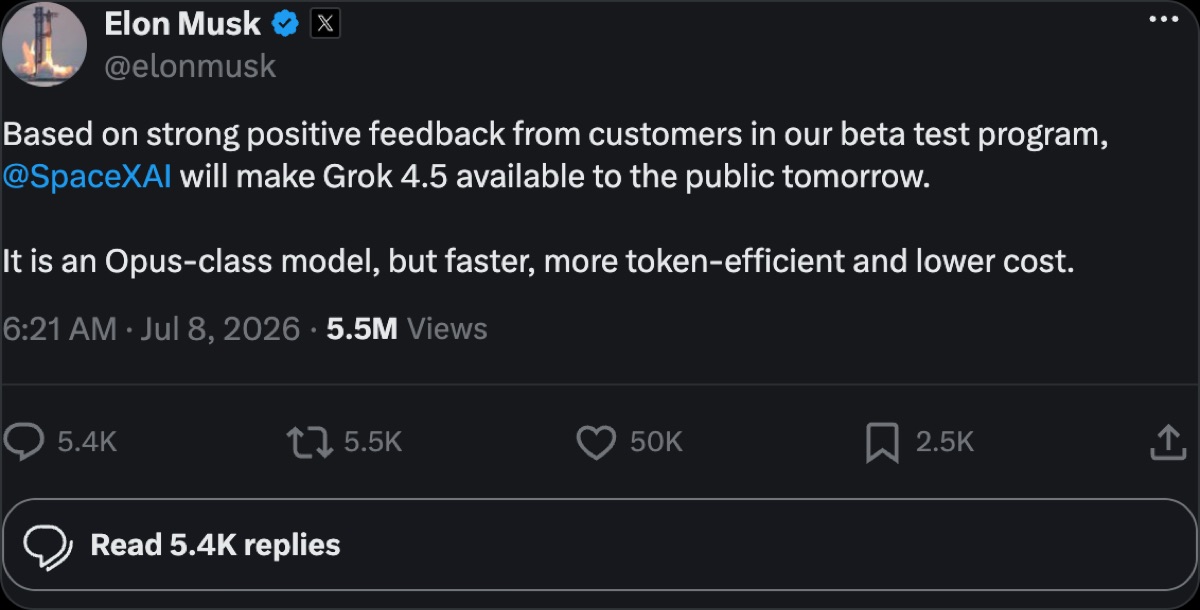
Elon Musk shipped Grok 4.5 on July 8, 2026 with a phrase that tells you more about the AI industry than any benchmark table: "an Opus-class model, but faster, more token-efficient and lower cost." Hours later, Sam Altman tweeted that GPT-5.6 Sol launches Thursday. Meta debuted Muse Image and Muse Video — its first media-generation models built as agentic systems. Three frontier releases in 48 hours. But the real story isn't the models. It's the language.
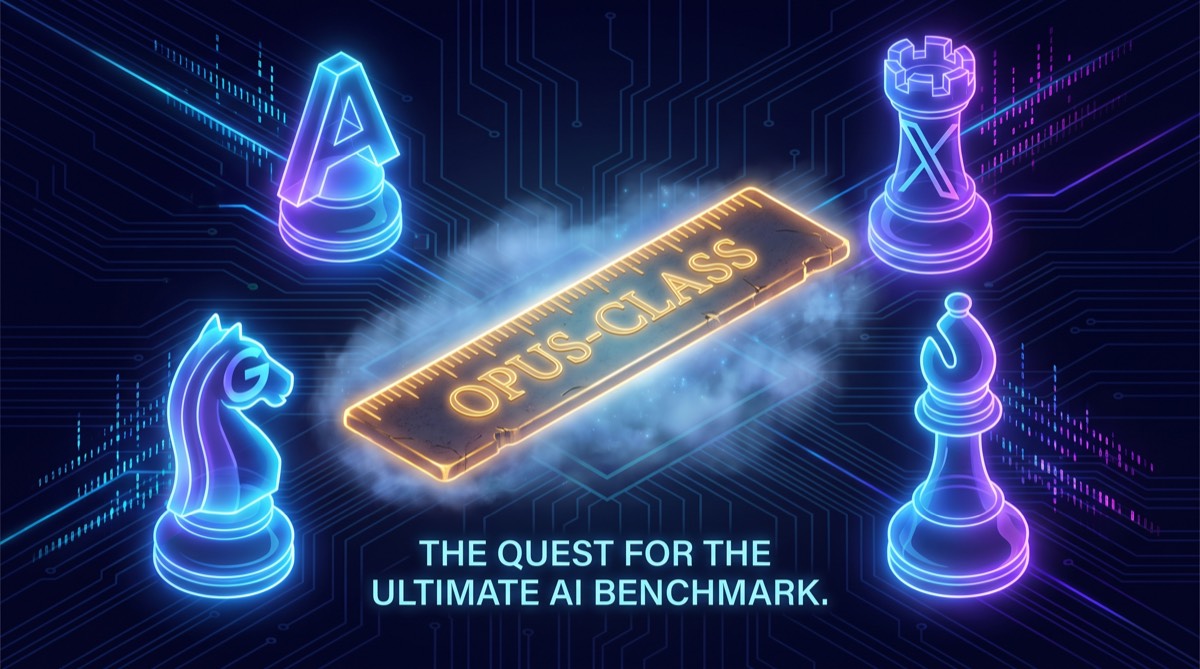
"Opus-class" is now the AI industry's yardstick. When the CEO of SpaceXAI defines his flagship model by referencing Anthropic's architecture — not by its own merits — he's conceding the capability frontier while repositioning the competition around cost, speed, and distribution. And he's not alone. OpenAI's GPT-5.6 family (Luna at $1/$6, Terra mid-tier, Sol at $5/$30) is a pricing strategy dressed as a product launch. Nvidia's Jensen Huang is pitching open-source Nemotron as the cost disruptor that collapses the entire closed-model business model. The model race didn't end this week — it just moved from "who's smartest" to "who's cheapest per quality tier."
What Shipped This Week — and What It Actually Means
Grok 4.5: The Cursor Play
SpaceXAI's Grok 4.5 is built on a 1.5-trillion-parameter V9 foundation and trained alongside Cursor, the AI coding editor SpaceX acquired for $60 billion in June. Musk's internal assessment: "roughly comparable to Opus 4.7, but much faster."
The pricing is the sharpest signal. Grok 4.5 launches at $2 per million input tokens and $6 per million output tokens. For comparison:
| Model | Input $/MTok | Output $/MTok | Speed Claim |
|---|---|---|---|
| Grok 4.5 | $2 | $6 | "Much faster" than Opus 4.7 |
| Claude Opus 4.7 | $5 | $25 | Benchmark leader |
| GPT-5.6 Sol | $5 | $30 | "Frontier intelligence" |
| GPT-5.6 Luna | $1 | $6 | Budget tier |
That's a 60% discount on input and 76% discount on output versus Opus 4.7. For a team running 100 million output tokens per month, that's the difference between a $2,500 bill and a $600 bill. At scale, this isn't a rounding error — it's the entire margin.
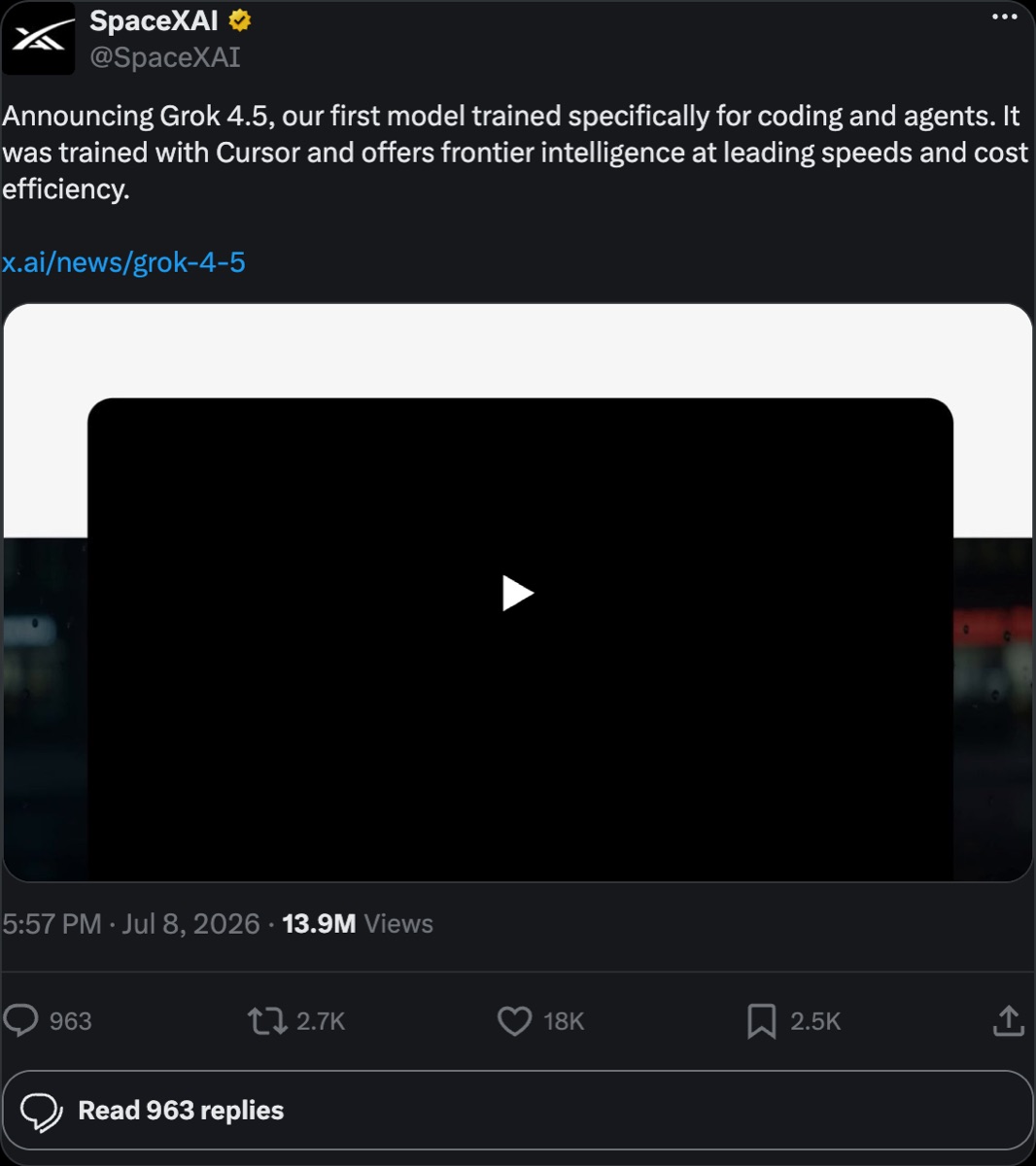
Cursor's CEO Michael Truell called Grok 4.5 "a significant step up over any model we've developed, including Composer 2.5." The distribution play is equally aggressive: Grok 4.5 launched simultaneously in Cursor, Vercel, OpenRouter, Cloudflare, Snowflake, and Databricks Mosaic. The IDE-first strategy is the tell — xAI isn't trying to win the chatbot war; it's trying to become the default engine inside developer tools.
GPT-5.6 Sol: The Government-Gated Launch
OpenAI's GPT-5.6 is perhaps the most capable model never freely available. Previewed on June 26 to roughly 20 trusted partner organizations, it remains gated behind a U.S. government safety review due to its advanced cybersecurity capabilities. Sam Altman's Thursday launch announcement signals broader availability is imminent — but the tiered structure (Luna/Terra/Sol) confirms OpenAI is playing the same cost-tier game as everyone else.
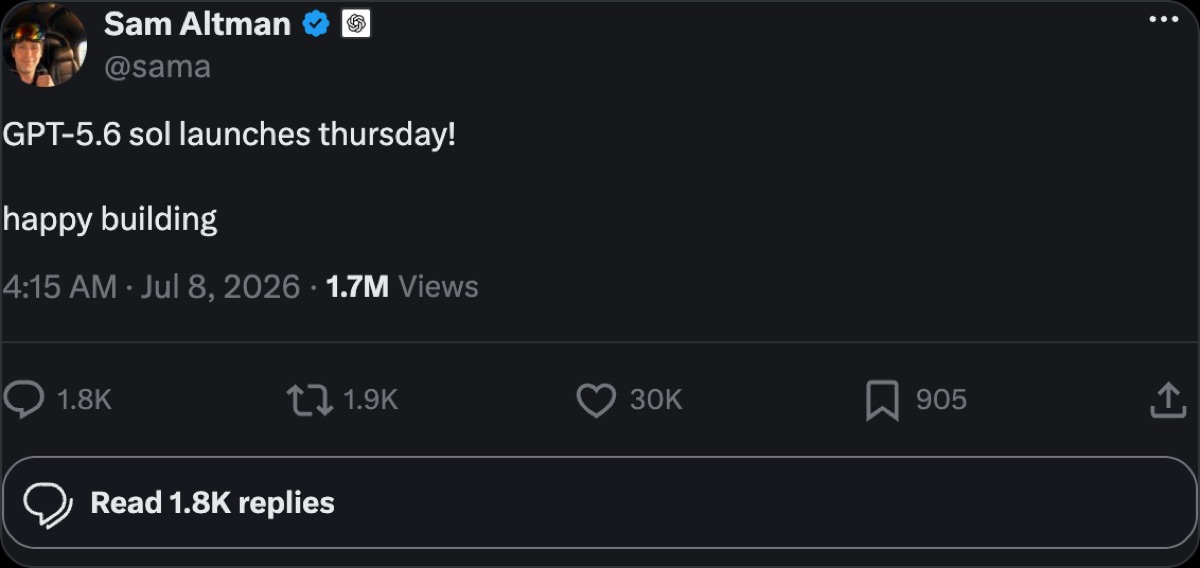
The three-tier approach is telling. Luna at $1/$6 directly undercuts Grok 4.5. Sol at $5/$30 prices at a premium over Opus. OpenAI is hedging — offering a model for every budget while hoping Sol's raw capability justifies the price tag. But the very existence of Luna proves the point: even OpenAI believes the floor price matters more than the ceiling capability.
Meta Muse: The Agentic Turn
Meta's Muse Image and Muse Video — the first models from Meta Superintelligence Labs — are architecturally fascinating even if they're not frontier text models. Muse Image doesn't just map prompts to pixels. It works as an agent: invoking tools, self-refining outputs, and improving with scaled test-time compute. It generates QR codes, charts, and functional images — capabilities that require reasoning, not just diffusion.
The privacy backlash was immediate (Muse can manipulate public Instagram users' photos by default, opt-out not opt-in), but the engineering signal is more important for this story: even Meta's media models are adopting the agentic scaffolding pattern. The model is the commodity; the harness is the product.
Nvidia's Open-Source Wedge
Meanwhile, Jensen Huang is running a different play entirely. In a LangChain interview, Huang argued that companies need open agent systems — and Nvidia's Nemotron family is positioned as the open-weight alternative to every closed frontier model. The pitch: "you won't tell Jensen's open LLM from Claude." Whether or not that's true today, the framing matters — Nvidia is explicitly positioning open-source as the cost-collapse mechanism that makes the entire closed-model price war irrelevant.
The Polymarket Signal: Fragile Consensus
Here's where the story gets interesting. On Polymarket's "best AI model end of July" market, Anthropic sits at 84% with $2.1 million in liquidity and over $5 million in total volume. Google trails at 10%, OpenAI at 5%. Anthropic isn't just leading — it's sweeping the board. Best model: 84%. Second-best model: 91%. Third-best: 88%. Best math model: 57%.
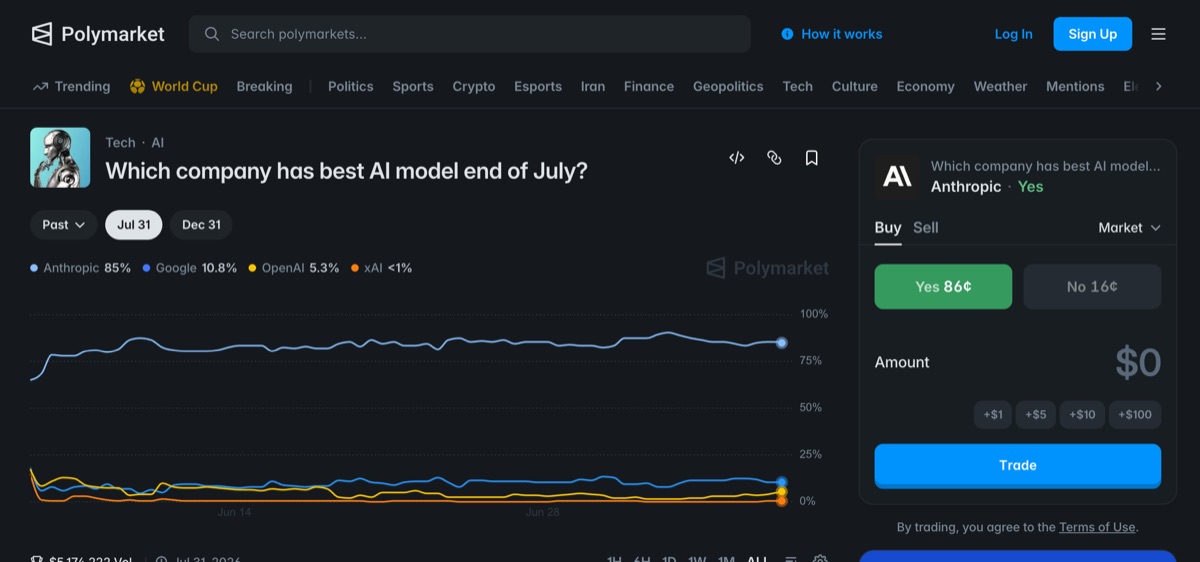
Contrarian Corner: When one company is the favorite for first, second, AND third simultaneously, traders aren't pricing model differentiation — they're pricing brand dominance. That's a fragile setup. It takes exactly one credible Google or OpenAI release to unwind three positions at once. GPT-5.6 Sol's broad release could be that catalyst. The compressed timeline to July 31 resolution is what's propping up the consensus — not demonstrated superiority over models that haven't launched yet.
The prediction market is telling us two things simultaneously: (1) Anthropic is the best right now, and (2) nobody else has released their best work yet. A +2.4% daily move for Anthropic on the day Grok 4.5 ships suggests the market views Grok's "Opus-class" framing as confirming Anthropic's lead rather than threatening it.
What the Community Is Saying
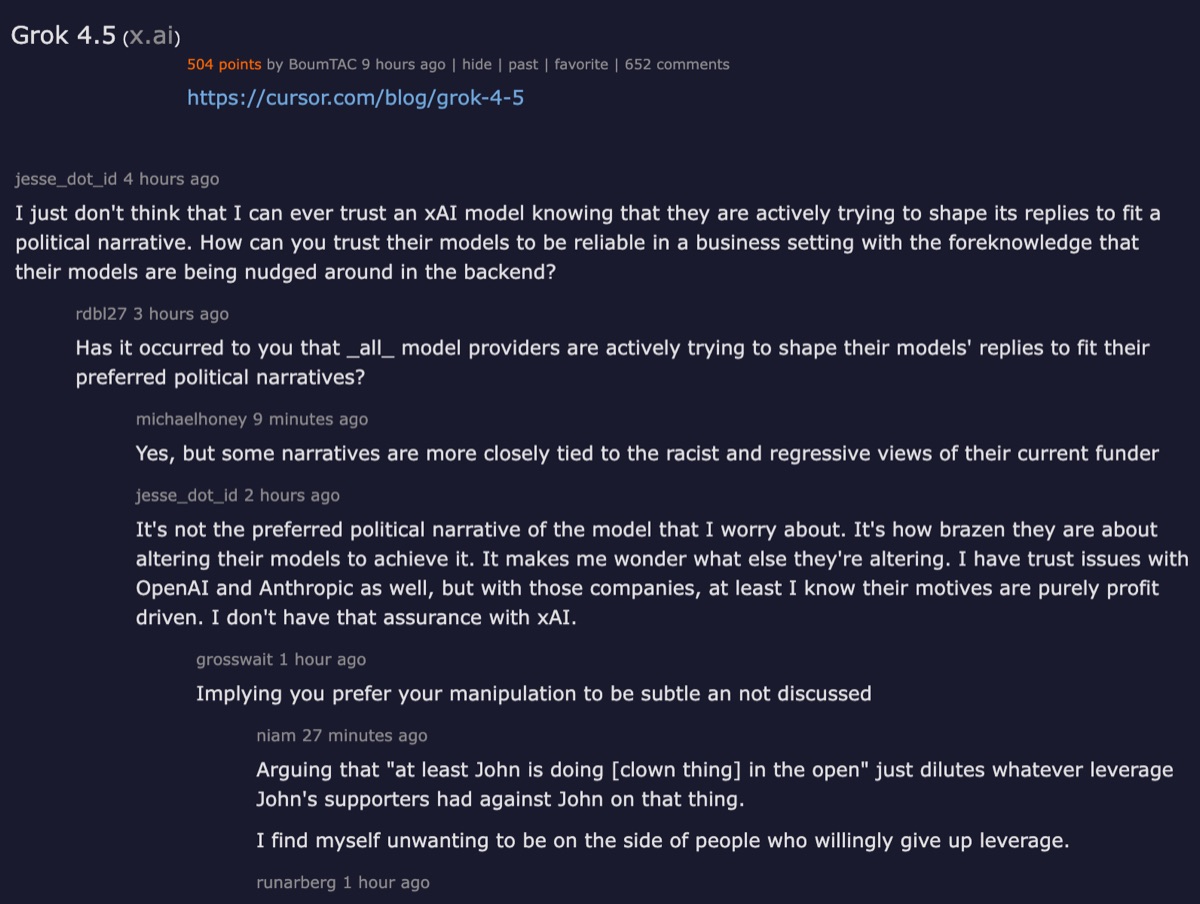
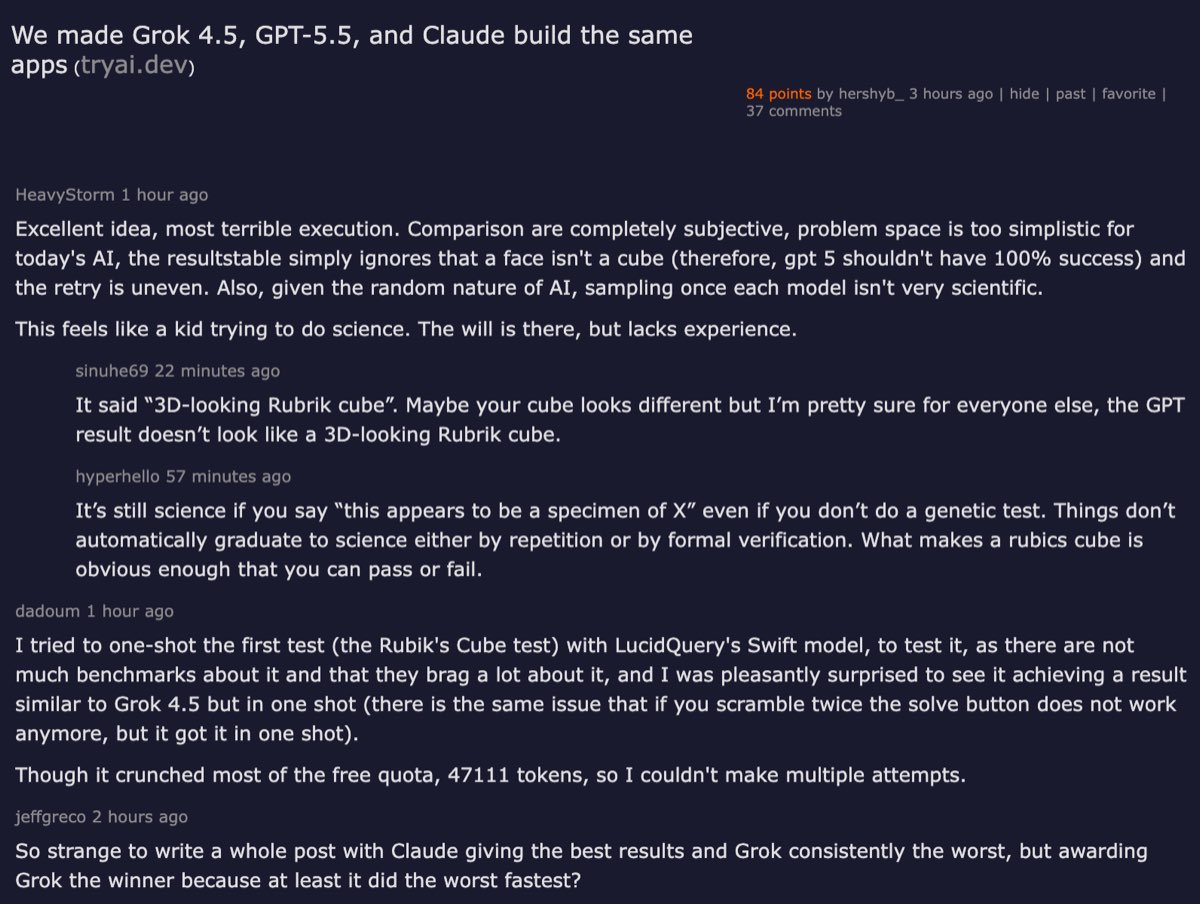
The Grok 4.5 Hacker News thread lit up within hours, with the community zeroing in on the pricing-versus-capability trade-off. A separate head-to-head comparison thread had developers building identical apps with Grok 4.5, GPT-5.5, and Claude to see whether the "Opus-class" claim holds up in practice.
On X, the multi-model orchestration thesis gained traction. Elvis Saravia (@omarsar0) put it bluntly: "Claude power users: 'Fable 5 is the best.' Codex power users: 'GPT-5.6 is the best.' Reality: Loyalty to a single model provider is a terrible strategy. The smart choice: clever orchestration between frontier closed and open models."
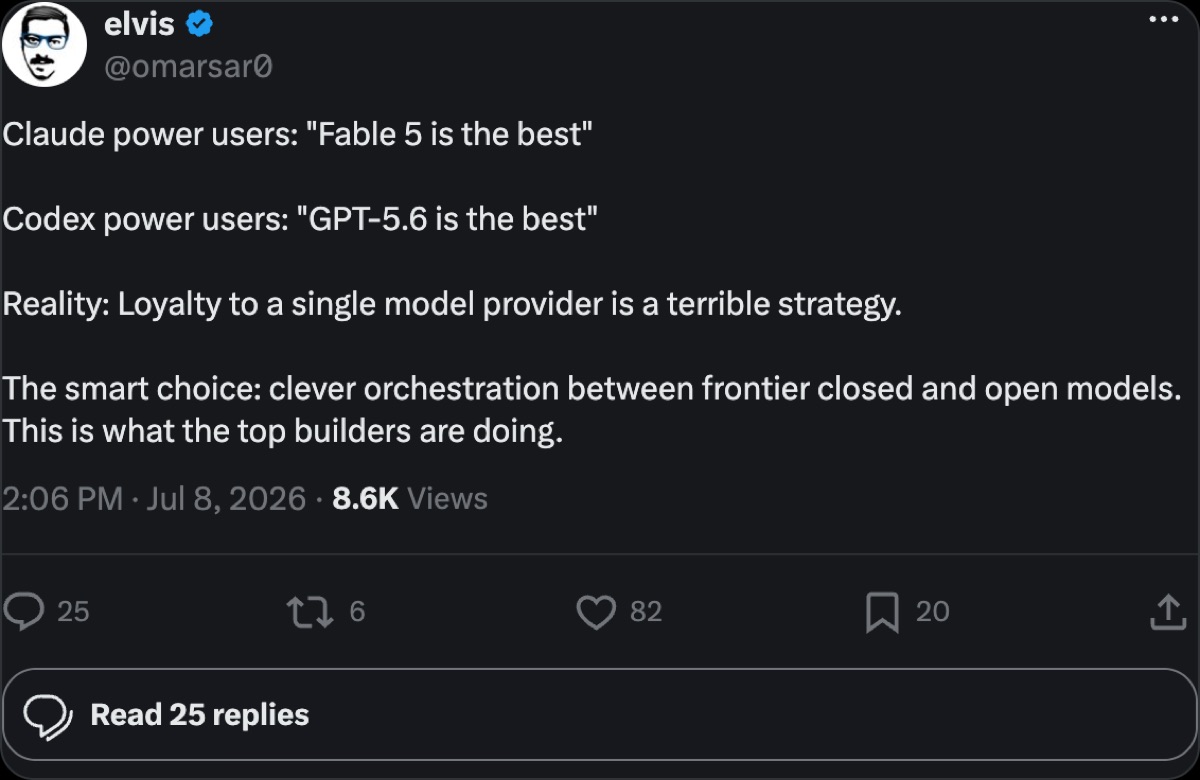
This isn't just one person's opinion — it's the emerging consensus among practitioners who actually run production inference. The open-weights camp is rallying around the same thesis: Prime Intellect's fresh funding round drew endorsements from HuggingFace CEO Clément Delangue and Dwarkesh Patel, with researchers noting that open-model harnesses achieve the same success rates as closed frontier models at half the cost.
The Real Competition: Cost Per Quality Tier
Strip away the marketing and the underlying dynamic is clear. Every major player is converging on the same capability tier — "Opus-class" — while differentiating on everything except raw intelligence:
Cost: Grok 4.5 at $2/$6 undercuts Opus 4.7 ($5/$25) by 60-76%. GPT-5.6 Luna matches Grok's floor. The race to the bottom is real and accelerating.
Speed: xAI claims "much faster" than Opus. OpenAI touts 750 tokens/second on Cerebras for Sol. Anthropic's Claude Code and Fable 5 optimize for agentic reliability over raw throughput.
Distribution: Grok launched in Cursor, Vercel, and six model gateways simultaneously. OpenAI has ChatGPT's 200M+ users. Meta ships to Instagram, WhatsApp, and the Meta AI app. Anthropic lives in developer tools (Claude Code, API) and enterprise contracts.
Ecosystem lock-in: The Cursor acquisition ($60B) means Grok isn't just an API — it's the default model inside the most popular AI coding editor. OpenAI's GPT-Live voice mode is a moat play for the consumer chatbot layer.
The pricing data tells the whole story. In January 2025, GPT-4 Turbo cost $10/$30 per MTok. Eighteen months later, equivalent capability costs $1-2/$6 from two vendors. Frontier model pricing is following the same deflationary curve as cloud compute — and the model providers know it.
What This Means for You
If you're building with LLMs in production, this week changed the calculus in three concrete ways:
1. Multi-model routing is no longer optional. With Grok 4.5 at 1/4 the cost of Opus for "roughly comparable" quality, the ROI case for single-provider loyalty is dead. Build an abstraction layer (LiteLLM, OpenRouter, or your own) that can route requests by cost-performance ratio. Use Opus or Sol for reasoning-heavy tasks; use Grok or Luna for high-volume, latency-sensitive workloads. The API landscape supports this today.
2. Watch the distribution, not the benchmarks. Grok's day-one availability in Cursor and Vercel matters more than its SWE-bench score. The models that win won't be the ones that top the leaderboards — they'll be the ones embedded in the tools developers already use. If your stack includes Cursor, you just got a cheaper default model whether you asked for it or not.
3. "Opus-class" has a 72-hour shelf life. Anthropic is already shipping beyond it (Opus 4.8 is out; Fable 5 sits above it). OpenAI's government-gated Sol hasn't been independently benchmarked yet. Google's Gemini team is conspicuously quiet. The current rankings — and the "Opus-class" label itself — will look different by the end of July. Build systems that can swap models at the API layer without rewriting your application logic.
The 48-hour model war of July 8-9, 2026 will be remembered not for which model won, but for the moment the industry stopped arguing about intelligence and started competing on economics. "Opus-class" is the highest compliment the industry can pay — and the clearest sign that the capability race has plateaued long enough for cost, speed, and distribution to become the real battleground.
The smartest thing you can do right now isn't picking a winner. It's building infrastructure that doesn't care who wins.
ComputeLeap Team
The ComputeLeap editorial team covers AI tools, agents, and products — helping readers discover and use artificial intelligence to work smarter.
Join the discussion
Have thoughts on this article? Discuss it on your favorite platform:
Related articles
OpenAI's Culture Problem Just Went Mainstream
Robinson's Atlantic essay, Altman's deflection, and Polymarket at 1% converge into one story about OpenAI's unraveling.
Open Weights Just Closed the Gap
Cloudflare's Clef beats the incumbent, FLUX 3 Image ships, and PewDiePie gets banned for distilling. Open weights are frontier.
Humanoids Are a Backward-Compatibility Layer
Palmer Luckey's strongest robotics argument, ARK's beaten forecasts, and China's embodiment race reframe humanoids as the API for the physical world.
The ComputeLeap Weekly
Get a weekly digest of the best AI infra writing — Claude Code, agent frameworks, deployment patterns. No fluff.
WEEKLY. UNSUBSCRIBE ANYTIME.